Speeding fines and penalties in the UK: how much do I have to pay?
March 17, 2026 by Siobhan Doyle

Seeing that flash in your rear-view mirror is every driver’s nightmare. Find out what fines and penalties you could face in the UK if you get caught speeding.
Getting caught speeding is a gut-wrenching feeling. Whether it’s a camera flashing or a police car pulling you over, you know a ticket is likely on its way.
If you’re caught speeding in the UK, you’ll typically face a minimum £100 fine and three penalty points on your licence – but the fine increases the more severe the speeding offence is.
Here’s everything you need to know about speeding fines and penalties.
Remember, you can buy a brand new or used car right here on Carwow. And you can sell your car, too. We’re here to help you through every step of your car-changing journey.
How do speeding fines work?
It’s illegal to exceed the posted speed limit, and doing so can result in a penalty. If you’re caught by a speed camera, a notice will usually be sent to the address where the vehicle is registered. If you’re stopped by a police officer, you may be issued a ticket on the spot.
In the UK, a speeding offence typically results in a fine, along with either penalty points on your licence or the option to attend a driver improvement course.
What happens when you’re caught speeding?
There are two main ways you can be caught speeding: either by a speed camera or by a police officer. The procedure for each is slightly different.
When you’re caught speeding by a camera
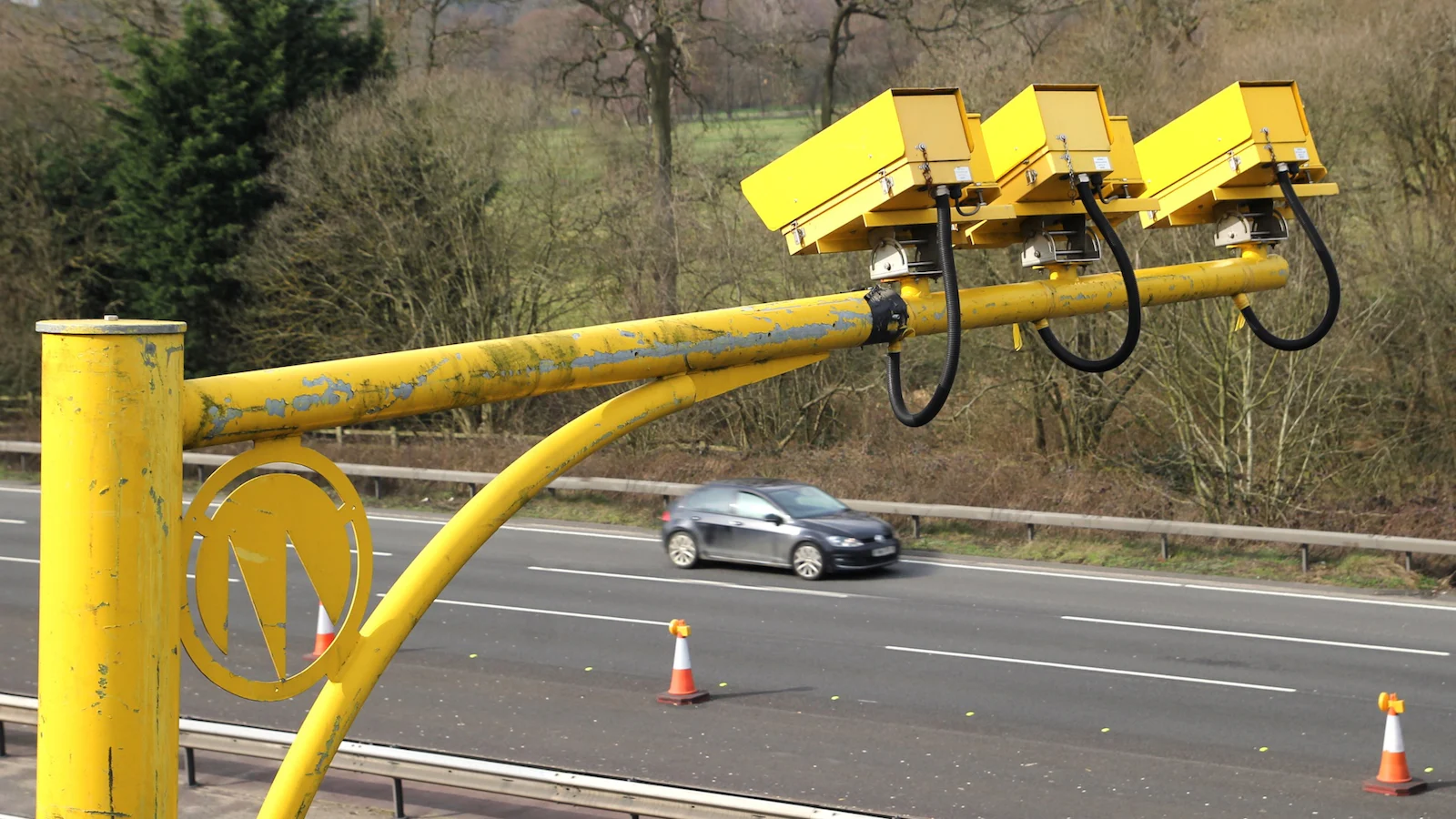
A speed camera is triggered if you pass it while exceeding the speed limit, capturing your number plate. If you’re caught by a static or average speed camera, you’ll usually receive a Notice of Intended Prosecution (NIP) within 14 days, along with a Section 172 notice.
You must complete and return the Section 172 notice within 28 days, identifying who was driving the vehicle at the time. Failing to do so may result in a court summons.
Once you’ve returned the notice, you’ll either receive a Fixed Penalty Notice (FPN) or be instructed to go to court. An FPN will outline the fine and penalty, and you can choose to plead guilty or not guilty. If you plead not guilty, the case will go to court, where a higher penalty may be imposed if you are found guilty.
When you’re caught speeding by a police officer
If you’re stopped by a police officer for speeding, they may take one of several actions. For a minor offence, you may receive a verbal warning.
Alternatively, you could be issued a Fixed Penalty Notice, either at the roadside or by post. As with camera offences, you can choose to plead guilty or not guilty.
For more serious offences, the officer may refer the case directly to court. In this situation, you’ll receive a letter explaining the next steps.

How much is a speeding fine?
Speeding ticket fines vary depending on the severity of the offence. These speeding offences are grouped into three categories: band A, B, and C. Here’s a breakdown of the categories for speeding fines.
- Band A (a little bit over): 1-10mph over the limit. Usually results in three points and a £100 fine. If the case goes to court, fines are calculated based on your weekly income.
- Band B (a lot over): 11-20mph over the limit. Typically results in 4-6 points or a 7-28 day ban, plus a fine of 75-125% of your weekly income.
- Band C (significantly/dangerously over): 21+mph over the limit. Typically results in six points or a 7-56 day ban, plus a fine of 125-175% of your weekly income.
Fines are generally capped at £1,000, or £2,500 for motorway offences when imposed by a court.
In some cases, you may be offered a speed awareness course instead of receiving points on your licence. These courses usually take a day and cost between £70 to £100. We’d recommend you shop around for the best deals on this.
While attending can help you avoid penalty points, there’s no guarantee the course will be offered, and you won’t be eligible if you’ve received a speeding conviction within the last three years.
More serious offences may fall into bands D, E, or F. Factors that can push a ticket into these categories include driving a large goods vehicle, towing a trailer or caravan, driving near a school, carrying passengers, or transporting a heavy load.
The fine for these bands is calculated as a percentage of your weekly income:
- Band D: typically 200-300% of your weekly income
- Band E: typically 300-500% of your weekly income
- Band F: typically 500-700% of your weekly income
How long does it take to get a speeding ticket
If you’re stopped by a police officer, you will immediately know whether you’ll receive a warning or face further action. Caught by a speed camera? You should receive a Notice of Intended Prosecution (NIP) in the post within 14 days.
We say “should” because the 14-day rule is not absolute. The Road Traffic Offenders Act 1998 states that offenders should receive a NIP or court summons “within fourteen days of the commission of the offence,” but this is a guideline rather than a strict deadline. Delays due to postal strikes, a change of address, or a hire-car company or employer forwarding the notice do not exempt you from the penalty.
How to pay a speeding fine
In England and Wales, you can pay your speeding fine online via the GOV.uk website. You just need your Fixed Penalty Notice (FPN) to hand and follow the instructions.
In Scotland, you can also pay online, or, if you prefer, by phone or post. Instructions are available on the Scottish Courts and Tribunals website.
In Northern Ireland, the process is slightly different. You must surrender both parts of your driving licence – the plastic card and the paper counterpart – at your local police station. The licence is sent to the Fixed Penalty Office to be endorsed with points before being returned to you. Once your licence has been processed, you can pay the fine by phone, post, or in person.
Can I contest a speeding fine?
You can appeal a speeding ticket by completing the relevant section on your Notice of Intended Prosecution (NIP). Consider carefully whether you have a strong case, as a rejected appeal will result in the matter going to court.
If you go to court to contest the ticket and are unsuccessful, you may face a harsher penalty than the one originally issued.
Acceptable grounds for dispute include:
- Unclear, obscured, or missing road signs (photographic evidence required).
- Someone else was driving the car (you must provide their details to the police).
- You are certain you were not speeding (you will need to prove this in court).
- Requesting the calibration certificate for the camera that recorded the offence.
Unacceptable grounds for dispute include:
- Claiming you didn’t know the speed limit.
- Being in a rush or responding to an emergency.
- Arguing that the roads were quiet or it was late at night.
What happens if I’m summoned to court?
If your case is considered serious – or if you appeal a ticket and your appeal is rejected – you may have to attend court. A summons for speeding is issued by the Magistrates’ Court and must be served within six months of the alleged offence.
For those accepting a Band C fine:
- You will usually attend a short hearing to confirm the details of the offence.
- You may be asked to enter a plea (guilty or not guilty).
- Magistrates will review any mitigating factors you present, such as apologising for the offence or explaining circumstances like being unaware of the speed limit or potential personal consequences (e.g., job impact from penalty points).
- If mitigation is accepted, fines may be reduced, or additional penalties adjusted.
- You typically won’t need a lawyer, but basic legal advice can help you prepare and present your case clearly.
Keep in mind that for more serious offences (bands D, E, and F), the court process becomes mandatory.
For those contesting their fine:
- You will need to present solid evidence supporting your claim.
- The prosecution will present its case, including camera data, witness statements, or police reports.
- Magistrates will weigh both sides, asking questions if needed.
- If found not guilty, no penalty applies. If found guilty, penalties may be higher than the original FPN, so careful preparation is essential.
Speeding penalties FAQs
Can I pay my speeding fine in instalments?
Speeding fines are due in full straight away. However, in some circumstances, the court may offer an instalment order. Don’t assume this will happen though.
Will a speeding fine affect my insurance?
If you have points on your licence as a result of a speeding fine, you will have to declare this to your insurance company. This may increase your premiums depending on your insurance provider’s policy.
How long do speeding points stay on your licence?
Points from a speeding offence will stay on your licence for four years, however they are only active for three years. When your points are active, they’ll add up if you get more at a later date. Once they’re no longer active, they won’t count towards your total number of points, however a judge may take them into account if you commit another driving offence.
Can I get disqualified from driving for speeding?
Depending on the severity of the speeding offence, you may be disqualified from driving for up to 56 days. Building up more than 12 points on your licence within three years also results in a “totting up” ban, lasting a minimum of six months.
When will I get offered a speed awareness course?
You will be offered a speed awareness course on your Fixed Penalty Notice for minor speeding offenses (normally in band A). If you go to court, you may be offered a speed awareness course if you successfully plead to mitigating circumstances.
How do I avoid a speeding fine?
The simplest and most obvious answer is to stick to the speed limit. Beyond that, cruise control can help you maintain a steady speed, while route guidance software can highlight speed cameras and speed limits. Many modern cars also come with intelligent speed assistance – a safety feature that scans road signs and uses GPS data to display the current speed limit on your dashboard or infotainment screen.
Who gets the money from speeding fines?
Money collected from speeding fines goes to a Consolidated Fund, which is seen as the Government’s current account. This means it goes on general government expenditure.
Can you check if you’ve been caught speeding?
No, there’s no online database to check instantly. You’ll usually know if you’ve been caught speeding within 14 days of the incident, as the registered keeper will receive a Notice of Intended Prosecution (NIP) via post.
Can I ignore a speeding ticket?
No, you cannot ignore a speeding ticket. Ignoring it will cause the case to be referred to a Magistrates’ Court, resulting in a likely fine of up to £1,000 (£2,500 on motorway) six penalty points, court costs, and potentially a driving ban.
Can you go to prison for speeding?
Yes, you can go to prison for severe speeding offences. For instance, excessively high speeds – such as over 100mph or significantly over the limit in lower-speed zones – can lead up to six months in prison.
Car change? Carwow!
Looking for a new set of wheels? With Carwow you can sell your car quickly and for a fair price – as well as find great offers on your next one. Whether you’re looking to buy a car brand new, are after something used or you want to explore car leasing options, Carwow is your one stop shop for new car deals.
Click here to follow us on WhatsApp, where you can keep up-to-date with all the latest news, reviews, advice guides and videos.
Compare cars using Carwow


