I watched Volkswagen crashing the new ID Polo, and it made me feel a lot safer


Car changing is a big deal


News editor Jamie Edkins has been to Volkswagen’s factory in Wolfsburg, Germany, to see how it tests the latest car safety systems. Your car does a lot more than you think to keep you safe.
Seatbelts have been mandatory in the UK for 43 years now, and that simple click at the start of every trip has saved countless lives. However, modern cars have way more than just seat belts protecting you in an accident, as I found out after a day at Volkswagen’s factory.
I’ve been speaking to its safety experts about crash testing, seatbelts, airbags and more to find out just how much research goes into making your car as safe as it can possibly be, and this is what I found out.
Remember, you can buy a brand new or used car right here on Carwow. And you can sell your car, too. We’re here to help you through every step of your car-changing journey.
How seatbelts actually work
Seatbelts are the oldest, most basic and arguably most important safety device in your car. It seems so simple in theory. You put it on, and it stops you smashing your head on the windscreen in a crash. But over the years seatbelts have become far more advanced.

The Mk1 Volkswagen Golf had a fairly basic “inertia reel” three-point seatbelt. It’s fitted with a mechanical system which locks the belt in place as you’re thrown forward using a gear which flings out when force is applied. You may have experienced it when you try to yank your belt on too quickly and it gets stuck.
Fast forward 50 years or so, and all modern cars are fitted with pretensioners. These use an explosive charge to pull the seatbelt back upon impact, keeping your body in the right position.
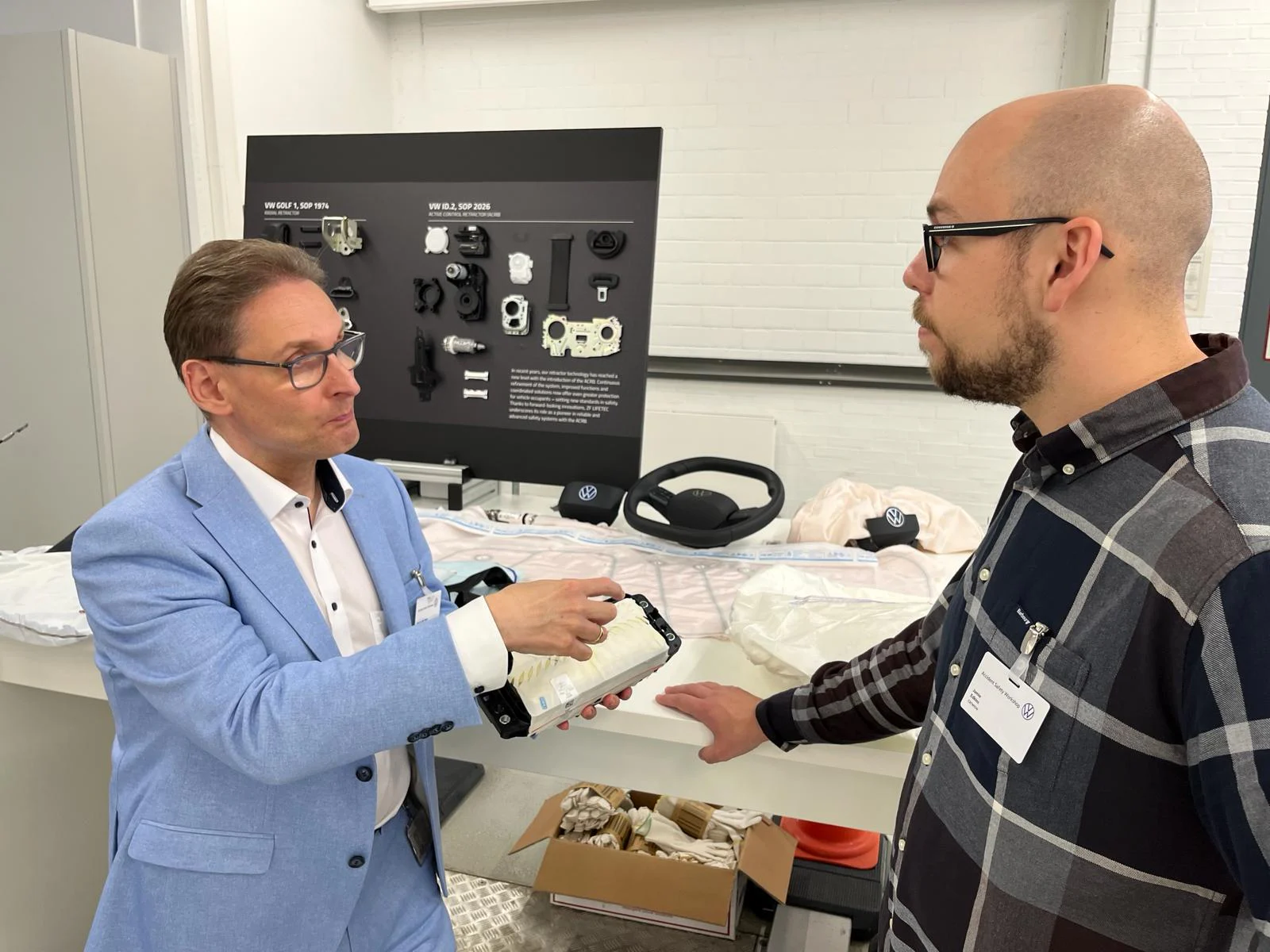
The new Volkswagen ID Polo is also fitted with a clever new piece of technology to stop people wearing their seatbelt incorrectly. A small minority of people try to get around the seatbelt warning by wrapping the belt behind the seat, or plugging a loose buckle into the slot. The ID Polo has a small camera which can pick up such antics, and you get an audible warning.
The job of a seatbelt is to both hold you in place, as well as absorb some of the massive forces which are exerted on your body in even a low-speed crash. They also work in conjunction with the airbags.
Everything you need to know about airbags
Volkswagen invited me to take part in a demonstration of the forces applied to your head in a crash at 37km/h (around 20 mph). I got to vent some frustrations on a crash test dummy by punching it to see if I could get anywhere near the same force.

I managed to exert a paltry 21g on the dummy, but the forces you experience in an accident are more than 60g. I never stood a chance of matching that, unless I was built like Anthony Joshua. I am not.

This is where airbags come in, because their job is to absorb a lot of those forces. They’re inflated three times faster than you can blink using an explosive charge, and modern cars have a lot of them.
In addition to the one in front of the driver and passenger, there are side curtain airbags which cover the windows, stopping your head from hitting the door in a side impact, and the new ID Polo has a centre airbag as well.

This pops out of the centre console, not only stopping the driver from being thrown too far to the other side of the car in a side impact but also stopping the driver and passenger from hitting their heads together.

I got to see this in action during the sled test. A big metal rig with the interior from an ID Polo is thrown sideways into a wall at 22mph, with a crash test dummy on board. The slow motion footage shows the centre airbag deploying, and compared to a test without it you can see the dummy’s head is much better protected.
Airbags are not fluffy pillows which softly cushion you. They’re incredibly loud and can hurt when they go off, but without them your body would go from 20mph to stationary almost instantly – which would hurt a lot more. The airbag slows this down, reducing the forces applied to your body.
Bringing it all together
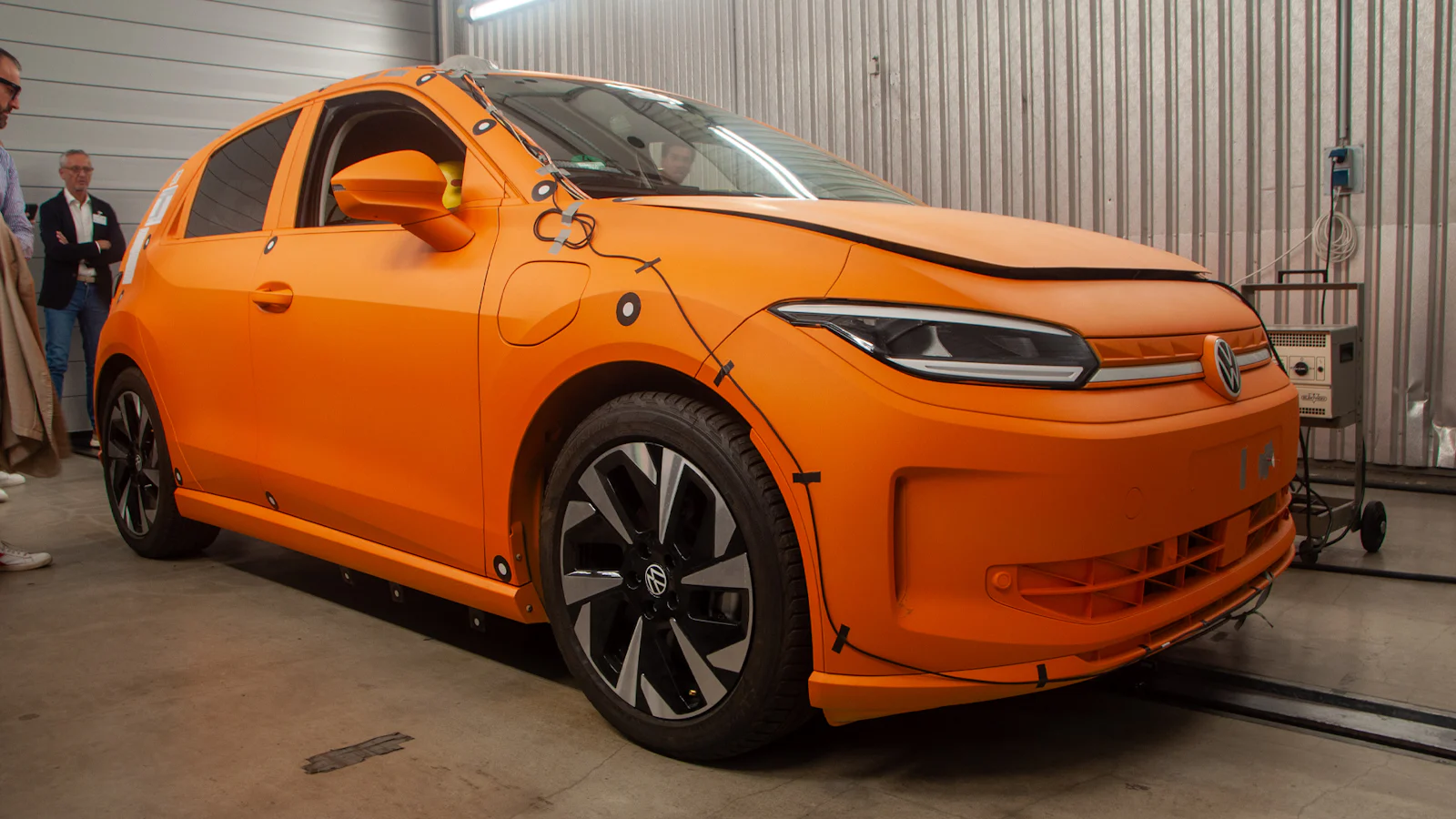
The biggest challenge is programming these safety systems to work together, because they all have to deploy in a certain order within a fraction of a second. I was among a very small group of people who got to see this in action during a live crash test of the new ID Polo.

The car was dragged into a wall at 50km/h (around 30mph), and watching with the naked eye it was impossible to make out the order everything went off. However, in ultra slow-motion you can just about see what’s going on.

The seatbelt pretensioner fires first, pulling the dummy back into the seat before the airbags go off. This reduces the impact from the airbags, as well as ensuring they work as efficiently as possible.

In the aftermath, the hazard lights go on and the windows roll down to release the fumes from the airbags. Looking into the car though, the cabin seems to be intact. The dummies are in one piece, there’s no intrusion into the passenger compartment and the doors all open as well.
There is a chance that you’ll be injured by the airbags and seatbelt, but the aim is to keep you alive. A few cuts and bruises, and even broken bones is much better than losing your life, and watching these systems in action is fascinating.
I hope to never need to see them in action in the real world, and I hope you don’t either, but it’s reassuring to know they’re there.
Car change? Carwow!
Looking for a new set of wheels? With Carwow you can sell your car quickly and for a fair price – as well as find great offers on your next one. Whether you’re looking to buy a car brand new, are after something used or you want to explore car leasing options, Carwow is your one stop shop for new car deals.
Want to see the latest car content first? Add Carwow as a preferred source here. Click here to follow us on Reddit, where you can keep up-to-date with all the latest news, reviews, advice guides and videos. You can also subscribe to our WhatsApp channel to get the latest news sent straight to your phone.