How long do brake discs and pads last?
February 18, 2026 by Siobhan Doyle

Brake pads and discs are among the most important safety components in your car. But how long do these last? Here’s everything you need to know.
Your brake pads and discs are vital to your safety. Every time you press the pedal, the pads create the friction that brings your vehicle to a controlled stop. And over time, that constant use causes wear and tear.
Keeping them in good condition protects you, your passengers, and everyone else on the road. This guide explains how long brake pads and discs typically last and when it’s time to replace them.
Remember, you can buy a brand new or used car right here on Carwow. And you can sell your car, too. We’re here to help you through every step of your car-changing journey.
What is a brake disc and pad?
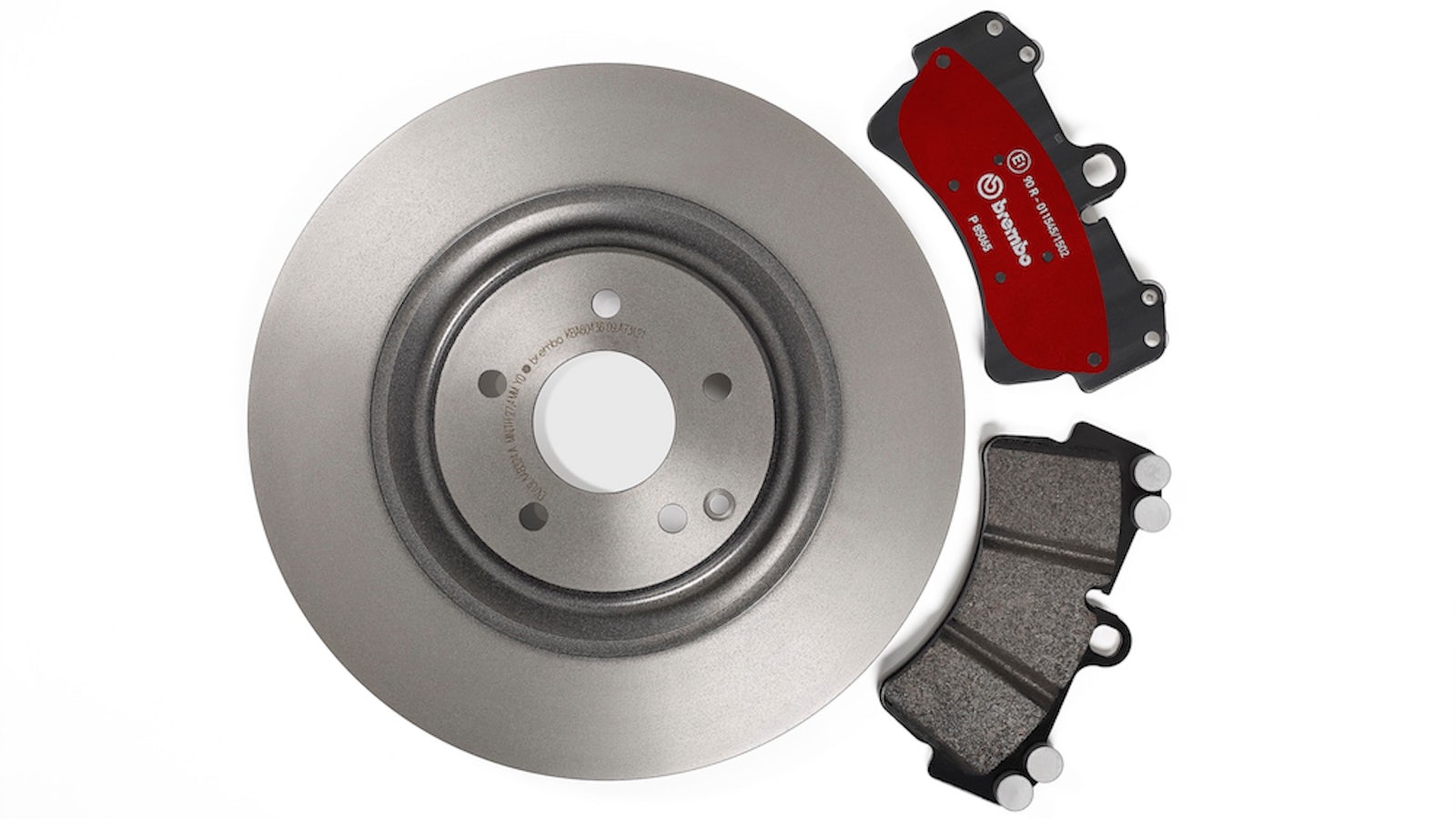
The braking system has three main components at each wheel: a pair of brake pads, a brake disc, and a brake caliper. The pads sit inside the caliper, positioned on either side of the brake disc, with their friction material close to its surface.
When you press the brake pedal, hydraulic fluid forces the caliper to squeeze the brake pads against the rotating disc. The resulting friction slows you down and brings the vehicle to a stop.
How long should brake discs and pads last?
Brake pads should typically last between 30,000 to 70,000 miles, while the brake discs generally last longer – usually around 50,000 to over 80,000 miles – before needing to be replaced.
What affects how long brake discs and pads last?
Brake pads are constantly used every time you slow down or stop, so there are a few factors that can influence their lifespan. These include:
- Frequently slamming on the brakes tends to wear out the pads much faster.
- City driving with stop-start traffic requires more braking, resulting in quicker wear compared to motorway driving.
- Heavier vehicles such as SUVs, and towing heavy loads such as caravans, require more braking force. This causes the pads and discs to work harder and wear faster.
- Higher-quality brake pads and discs are generally more durable, whereas cheaper alternatives may degrade faster.
- Driving in wet, icy or muddy conditions can introduce debris that affects the braking system.
When do brake discs and pads need replacing?
Here are the key signs that your car’s brake pads and discs need attention:
- Many modern cars feature a brake pad warning light on the dashboard. When this illuminates, it indicates an urgent need for replacement.
- Listen for a loud, persistent squealing sound when you brake. If this is ignored, it can progress to a loud grinding noise, signifying that your brake pads are completely worn and potentially causing damage to the brake discs.
- If you feel vibrations through the steering wheel while braking, it suggests that your brake discs are unevenly worn and need to be replaced.
- Longer braking times can indicate wear and tear to the pads and disc.
How much does it cost to replace brake discs and pads?
The cost of replacing brake pads and discs generally falls between £200 and £700 per axle, with an average price point of about £300-£350. However, pricing highly depends on your car’s make and model.
Costs also vary depending on which brakes are serviced:
- Front brakes typically range from £200 to £500. They’re more expensive because they handle around 60-70% of the braking force leading to faster wear.
- Rear brakes often cost less, ranging from £65 to £250.
Expect higher prices for brake pads and discs on premium, SUV, and performance vehicles.
If you have mechanical knowledge and the right tools, it’s possible to do it yourself to save on the labour costs. However, we’d highly recommend you take it to a garage to ensure the brakes are installed correctly.
Brake discs and pads FAQs
How long does it take to replace brake discs and pads?
Changing brake pads and discs typically takes a professional mechanic one to two hours per axle (front or rear). Meanwhile, a full, four-wheel replacement usually takes up to 3-4 hours.
Can you change brake discs without changing pads?
It’s physically possible, but we strongly advise against changing the brake discs without replacing the brake pads. This is because installing new discs with old, unevenly worn pads will cause reduced braking performance, potential damage to the new discs and uneven braking.
Are all brake discs and pads the same size?
No, brake discs and pads are not all the same size; they vary by the make, model, year trim, and engine size. Larger, heavier, or high-performance vehicles need larger discs and pads for better braking power, while smaller cars use smaller, lighter components.
Are brake discs and pads checked during an MOT?
Yes, brake discs and pads are thoroughly checked during an MOT to make sure they are safe, functional, and not excessively worn.
Are brake discs and pads covered under warranty?
No, standard manufacturer warranties typically do not cover brake pads and discs, as they are considered “wear-and-tear” items. If in doubt, it’s best to look at the fine print to check what’s covered and what’s not under the car’s warranty.
However, if a premature failure can be linked to a manufacturing defect rather than normal use, coverage may apply. If you suspect this is the case, we recommend having a mechanic investigate the issue.
Car change? Carwow!
Looking for a new set of wheels? With Carwow you can sell your car quickly and for a fair price – as well as find great offers on your next one. Whether you’re looking to buy a car brand new, are after something used or you want to explore car leasing options, Carwow is your one stop shop for new car deals.
Click here to follow us on WhatsApp, where you can keep up-to-date with all the latest news, reviews, advice guides and videos.
Compare cars using Carwow