Does a car really need a steering wheel? We test out Mercedes’ new steer-by-wire system


Car changing is a big deal


Steer-by-wire offers many benefits in theory, but what’s it actually like to drive? We get behind the wheel – er, yoke – to test out Mercedes’ new system in the EQS
EVs have revolutionised what’s under the bonnet of our cars, and touchscreens have revolutionised what’s on the inside, so what’s left? Well, the next big thing would seem to be steer-by-wire tech.
In brief terms, steer-by-wire means that there’s no physical connection between the car’s steering apparatus and the front wheels – it’s a purely electrical interface. I say apparatus because so far, by-wire steering has been marked by car manufacturers giving the vehicles a steering yoke rather than a wheel.
Remember, you can buy a brand new or used car right here on Carwow. And you can sell your car, too. We’re here to help you through every step of your car-changing journey.
Controls by-wire aren’t a particularly new innovation. They’ve been used in aircraft for decades, and even within cars you’ll find by-wire gearshifts, partially by-wire brake systems and even by-wire clutch pedals in a few Kia and Hyundai models. And the truth is that power steering has been around for donkey’s years, the latest systems are electric and can take control of the wheel at a moment’s notice anyway. We’re a long way from the days of steering being purely mechanical.
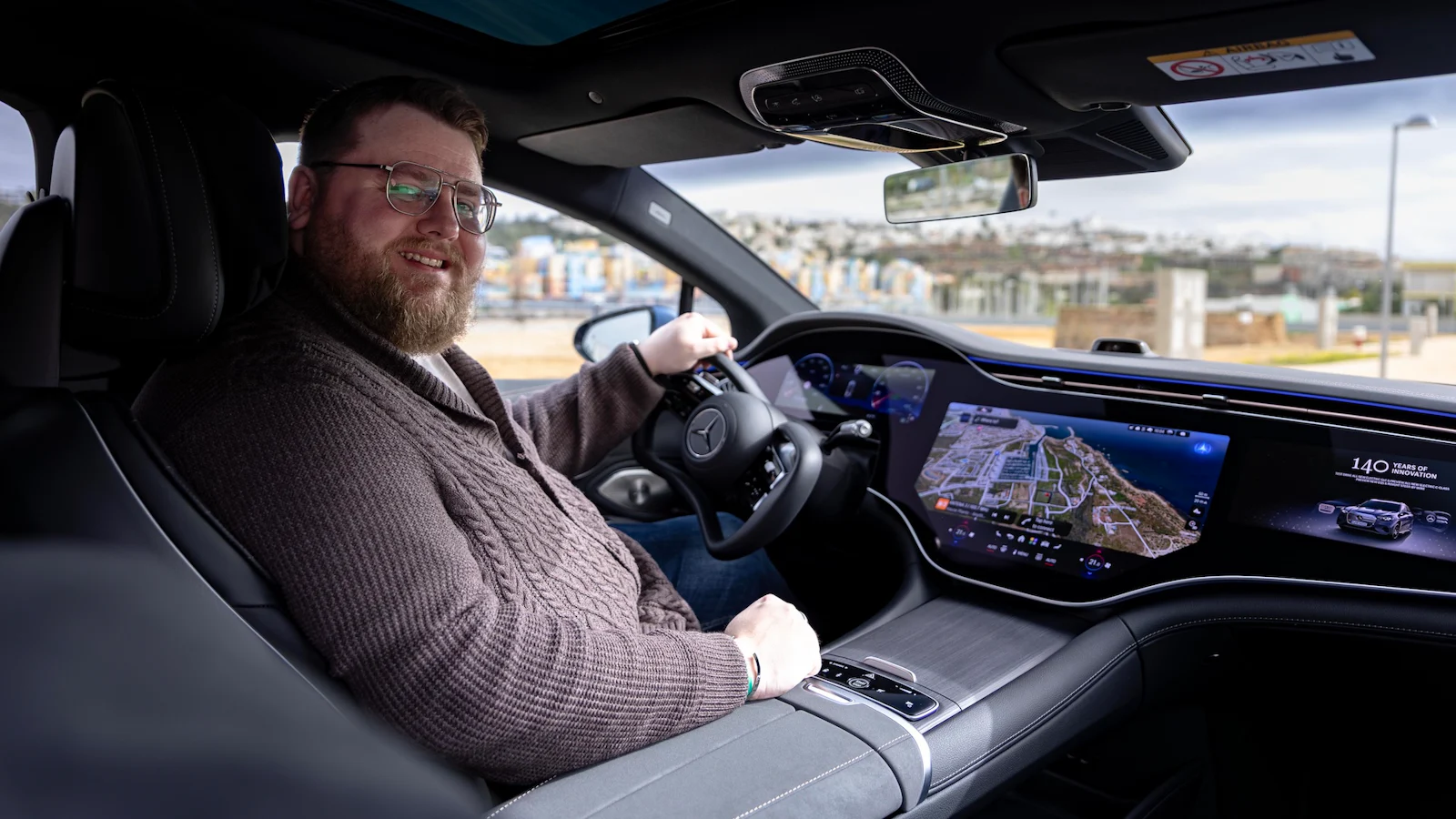
But the difference with these new steer-by-wire systems is that there’s no mechanical backup if anything fails (though of course there are many failsafes – they’re just redundant electrical systems rather than a physical column). Plus, they’re fitted with variable ratios so that no matter how fast you’re going you should never need to cross your hands over – making a yoke a sensible addition.
Mercedes will fit the new steer-by-wire system to its EQS electric car, but it’s likely to filter down to different models as time goes on. Initially, it’ll be an option – and you’ll be able to choose either a yoke or a standard steering wheel, though both will operate the same variable-ratio steering.
Merc’s steer-by-wire guru, Luc Diebold, talked us through some of the advantages. Packaging is easier, he pointed out, because there’s no need to accommodate a steering column running through the car’s firewall. Future models will be able to have bigger storage areas in the front, and switching to right-hand-drive for markets like the UK will be made easier.

“There’s no reason we need to have a yoke, either,” he pointed out. “The wheel can be any shape. Round, square, we could even have a triangle wheel. Or no wheel at all?” That last part was a reference to a famous Mercedes concept car of the 1990s – the F200 ‘Imagination’ coupe used a pair of joysticks for stopping, starting, and steering.
Luc’s fairly convinced that steer-by-wire will penetrate all areas of the market before too long, starting with large luxury models before moving down into more everyday fare. To that end, I tried it out in an EQS.
A couple of weeks previously, I’d tried steer-by-wire in a Lexus RZ – so I was curious to see if Mercedes could implement it as well. The first thing you notice is how agile it makes the car feel. The EQS is fitted with rear-wheel steering for better manoeuvrability, and that combined with the very quick steering means that at low speeds it makes a truly massive car feel very darty.
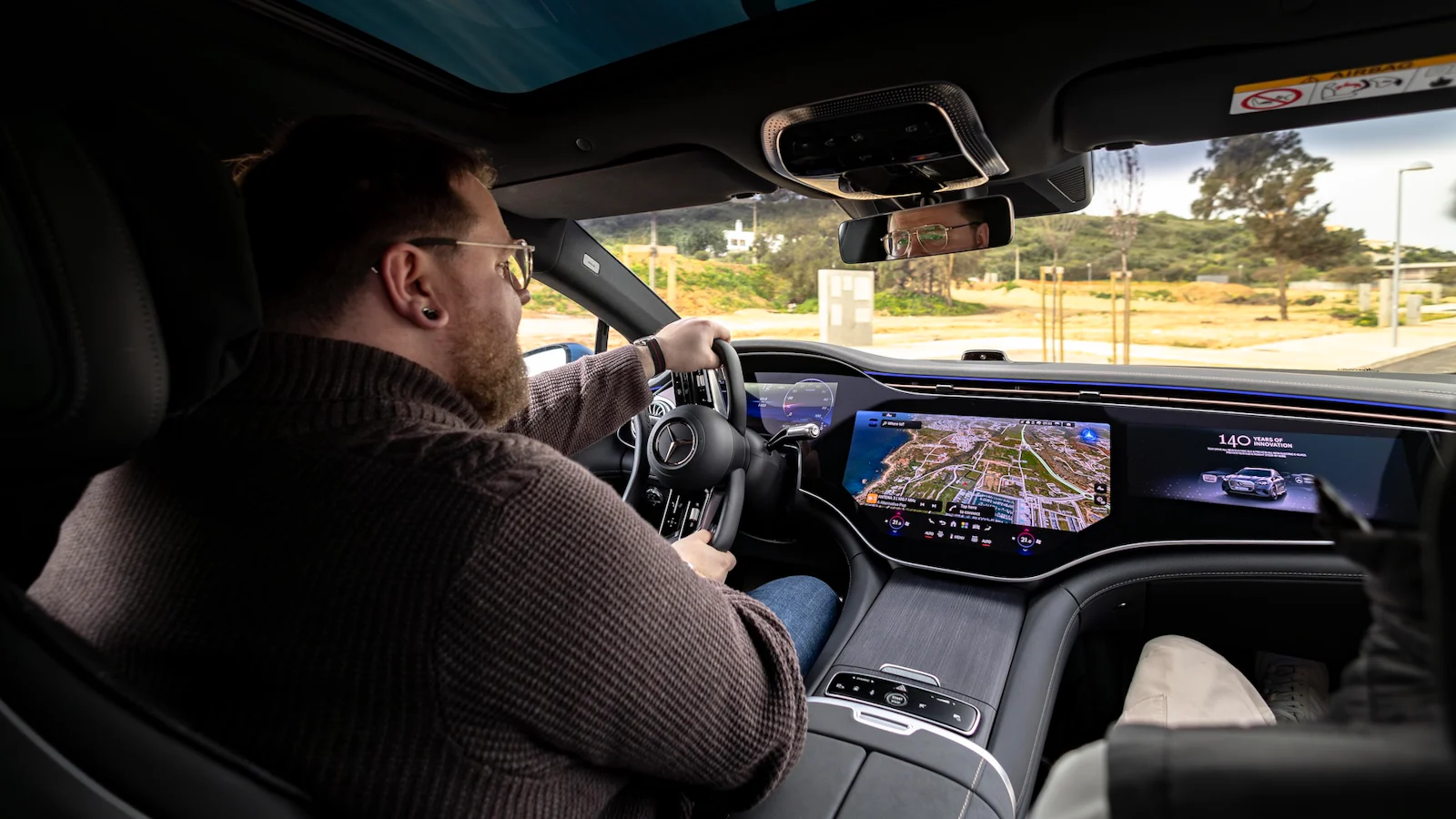
It took some getting used to, actually – figuring out how little input you actually need to do an ample 90-degree bend led to some overshooting, but after a few runs I got the hang of it. You do also get a good view of the car’s dash without the upper ring of a wheel to peer through.
Stepping back into an EQS with a traditional wheel felt a bit ponderous – like captaining an ocean liner, twirling the wheel with seemingly little results. I think the steer-by-wire system actually makes a good amount of sense on a car this size, especially if you’re driving it in a tight city. It certainly felt more useful than the system did on the much smaller Lexus RZ.
I’m not convinced of universal penetration, though. For a start, the weird variable ratio means you just don’t feel connected to the wheels in any way. Performance car fans won’t like that much, no matter how much artificial feedback the manufacturer bakes in – it’ll just be like a computer game with a force feedback wheel.

I don’t think we’ll see it on many cheap cars any time soon – though Peugeot has promised that it’ll feature on one of its models within the year. The expense of testing the system, ensuring enough redundancy for safety and the added complexity over existing power steering systems means it’ll probably add a ton of cost – and these smaller, more manoeuvrable cars weren’t really crying out for it in the first place.
I’m sure steer-by-wire, like illuminated grilles, in-car AI and electrochromic sunroofs, will soon filter onto a whole glut of posh models from various brands. But I won’t be rushing out to recommend it just yet.
Car change? Carwow!
Looking for a new set of wheels? With Carwow you can sell your car quickly and for a fair price – as well as find great offers on your next one. Whether you’re looking to buy a car brand new, are after something used or you want to explore car leasing options, Carwow is your one stop shop for new car deals.
Click here to follow us on Reddit, where you can keep up-to-date with all the latest news, reviews, advice guides and videos. You can also subscribe to our WhatsApp channel to get the latest news sent straight to your phone.