What does payload mean on a van?
March 10, 2026 by Tom Wiltshire

When you’re choosing a van, it’s of course super-important to make sure it has enough space for all the items you need to carry. But there’s another aspect to carrying capacity, and that’s van payload.
Payload refers to the weight the van can carry, rather than the volumetric capacity, and while some users may not have to worry too much about it, for others it’s an incredibly important metric to consider when purchasing. Read on to find out more.
Remember, you can buy a brand new or used van right here on Carwow. And you can sell your old van, too. We’re here to help you through every step of your journey.
What is a van payload?
Payload refers to the maximum weight that a commercial vehicle can legally and safely carry. It’s distinct from load capacity, which refers to the volume of the van’s cargo area. Payload is measured in kilograms and includes not just the cargo being hauled but usually any passengers over and above a 75kg driver.
How to find the payload of a van
There are a couple of ways to find a van’s payload. The first thing is to check with the vehicle’s manufacturer. There are a great number of factors that affect van payload so getting an official number is a very useful thing to do, especially if you’re going to be carrying heavy loads regularly and potentially using the vehicle to its fullest capacity.

The other way is to calculate the payload yourself. First, start with your Gross Vehicle Weight (GVW) – this is the maximum legal weight of your van with everything taken into account. You can find this in the owner’s manual, the registration document, or on a plate or sticker inside the door frame.
Next, determine your van’s kerb weight, sometimes called Mass in Running Order, which is the weight of the vehicle without any passengers or cargo, but a 75kg driver and a full tank of fuel. You can find this in the owner’s manual or by contacting the manufacturer, but if you want a more accurate reading – for example, if you’ve fitted racking in the rear and want to know your remaining available payload – you can visit a weighbridge.
Subtract the kerb weight from the GVW to determine your van’s payload capacity. For example, if you’re driving a Citroen Berlingo with a 2,400kg GVW and a 1,408kg kerb weight, your total payload will be 982kg.
Typical payload ranges for different van types
Overall payload varies drastically depending on which model of van you’re looking at. For example, in the small van category, something like a Ford Transit Courier can only carry around 650kg in most forms. That stretches right up to over 1,000kg for some versions of the Citroen Berlingo and its sister vehicles.

The same is true of medium vans. Some specialised models can only carry around 800kg, such as a well-equipped Mercedes Vito or an LEVC VN5. But the best Ford Transit Custom can carry nearly 1,400kg.
With large vans the story is slightly different, and it depends where they’re aiming. You see, most people can only drive a vehicle of up to 3,500kg GVW due to the categories on their licence – and this can mean that, in a large and heavy-duty van, there’s not much spare payload before this threshold is reached.
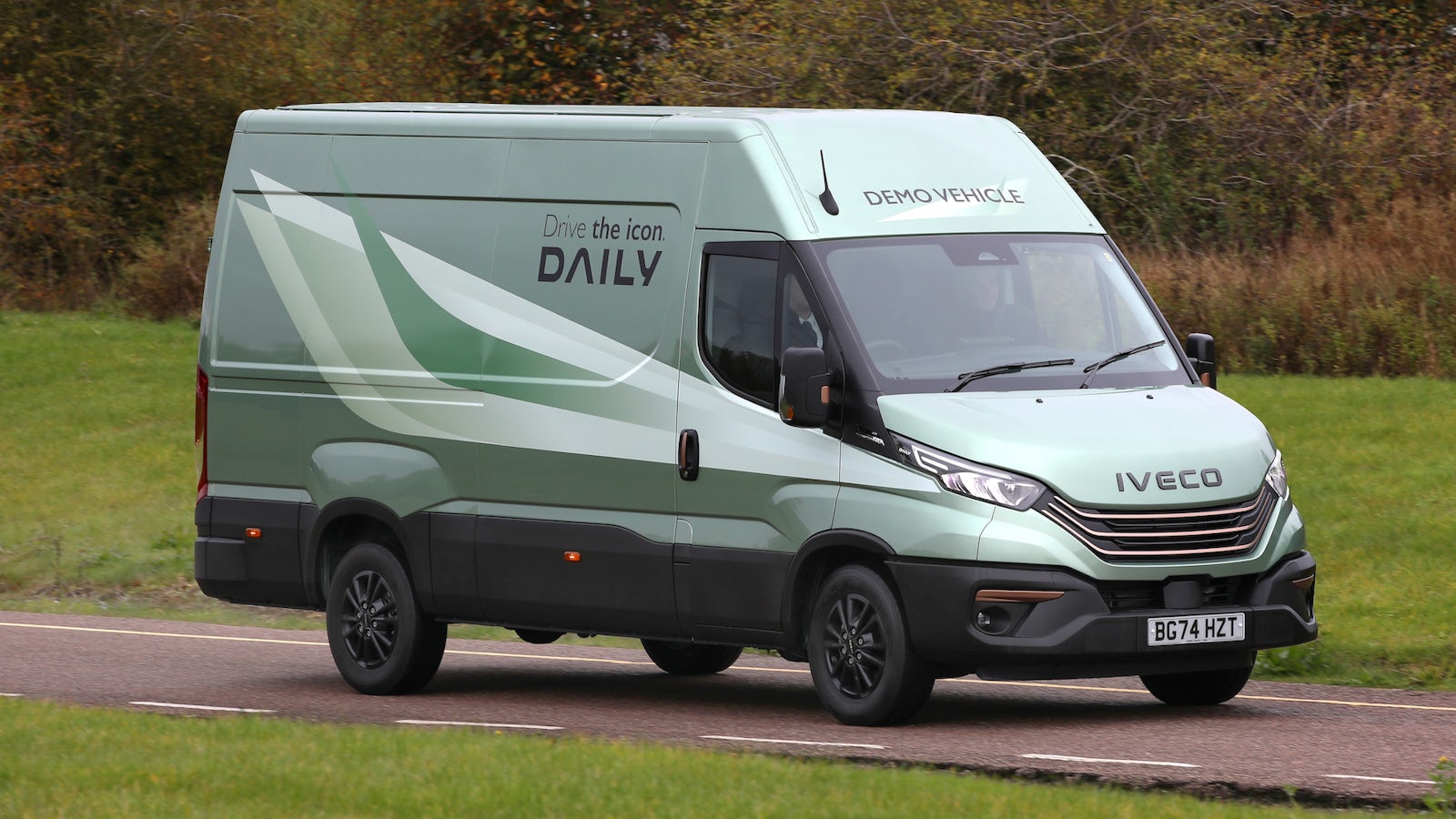
This can mean that some of the largest vans, such as the Iveco Daily, only have a max payload of around 1,000kg – unless you up-spec the chassis. If you go for a Daily with a higher GVW, you can get almost 4,900kg of payload.
For most businesses though, it makes sense to get the maximum payload available on a vehicle under 3,500kg – and that would be something like a Ford Transit or Renault Master, both of which can take more than 1,600kg.
What factors affect van payload capacity?
So how is it that different models of the same van can have vastly different payloads? Well, there are numerous factors that affect things.
The first is what the vehicle is rated for. GVW can differ between vans, even mechanically similar ones, and that’s the thing that affects payload the most.
Then there’s kerb weight. A heavier van will have less payload available to the user. Kerb weight can be influenced by many things, such as:
- Body size – long-wheelbase or high-roof vans are heavier than smaller ones
- Engine size and power – bigger engines weigh more
- Fuel type – batteries are very heavy, so electric vans will have less payload than diesel ones
- Standard equipment – items such as extra seats, heavy luxury equipment or even different wheels can affect the vehicle’s weight
- Modifications and accessories – roof racks, internal shelving, or any fitted specialist equipment will reduce the vehicle’s overall payload capacity
- Passengers – people count as payload too and should be factored in when calculating
What happens if you exceed the van payload?
Exceeding a vehicle’s maximum payload isn’t recommended for two reasons – a legal one, and a safety one. The legal one is simple: a vehicle is rated for a certain weight, and exceeding that weight is against the law.
Enforcement agencies can stop you at the roadside and direct you to a weighbridge to check if you’re exceeding your vehicle’s payload, and have the power to dish out fines and require you to unload. Think of it like trying to sneak a bit too much luggage onto a Ryanair flight.
You can even get penalty points on your licence or, in severe cases, be prosecuted – plus, your insurance could be invalidated if you’re involved in an accident in a vehicle that’s found to be overweight. Don’t risk it.

Overloading a van also creates safety risks. A kilo or two won’t make much difference – though it’s still illegal – but a vehicle that’s loaded significantly over its max payload will be more difficult to control, has reduced stability and increased braking distances. Put simply, the vehicle’s suspension, chassis and braking system are built to carry a certain weight – exceeding this goes beyond what they’re designed for.
This also creates wear on vital components, shortening their lifespan, and also increases fuel usage. So it really is a false economy.
Van payload FAQs
Is fuel included in the payload on a van?
No, a full tank of fuel is included in the vehicle’s kerb weight or mass in running order. So you don’t need to factor it in when considering payload, unless your vehicle is fitted with extra tanks for longer range.
What happens if the van payload is too great?
If you exceed your vehicle’s max payload then you reduce the safety of the vehicle, and could be in line for fines, penalty points or even prosecution if you’re caught.
Which van has the highest payload?
The 7.2-tonne Iveco Daily has the highest payload of any panel van at nearly 5,000kg, but it requires a heavy-duty licence to operate. The best payload of a van under 3.5 tonnes, that can be driven on a regular car licence, is the Ford Transit at up to 1,646kg.
Change your van with Carwow
Time to trade in your van? With Carwow you can sell your old van quickly and for a fair price – as well as find great offers on your next one. Whether you’re looking to buy a van brand new, are after something used or you want to explore van leasing options, Carwow is your one stop shop for van changing.
Click here to follow us on Reddit, where you can keep up-to-date with all the latest news, reviews, advice guides and videos. You can also subscribe to our WhatsApp channel to get the latest news sent straight to your phone.
Compare cars using Carwow