Best electric cars 2026
High quality electric cars from rated and reviewed dealers



Best electric cars for sale in 2026
Not only are the best electric cars a potential way to minimise running costs, they’re practical, great to drive and now offer enough range to be genuinely usable in day-to-day life.
Thanks to batteries getting smaller and smarter, you’re not just limited to big electric saloon cars and SUVs like the Mercedes CLA Electric and Citroen e-C5 Aircross anymore, either. The Cupra Raval fits a lot of space into a small package, and Fiat Grande Panda Electric is one of the funkiest small cars on sale.
Our expert reviews team have comprehensively tested every electric car on sale, putting them through their paces in a wide range of real world scenarios. Here are the ten best you can buy.
1. Mercedes CLA Electric
Mercedes-Benz CLA Electric reviewThe new Mercedes CLA is a very different car to its predecessor, and we’re not just talking about the fact that this one comes with a battery. Yes, there will also be a petrol-hybrid version of the CLA, but the headline acts are the rear-wheel drive CLA 250+ and four-wheel drive CLA 350, both of which use a big (but not excessively large) 85kWh battery. That battery, combined with the CLA’s slippery aerodynamics, means you get a whopping 491 mile range on one charge, and that’s not just an on-paper figure — as long as you’re not caning the CLA up and down the motorway all day, it’s not far off a real daily driving number.
OK, so it’s not as pretty as the old CLA thanks to a slightly weird gaping mouth with slim headlights and a light bar mounted above, as if it were wearing a head-torch, but the overall shape is nice enough, and the Shooting Brake estate looks nicer again. Inside, there’s wall-to-wall tech. No, literally, as if you specify the CLA with the optional passenger-side touchscreen, there’s basically nothing but screens from one door pillar to the other. They’re slick and work well, but it’s a bit of an overload and has the potential to be hugely distracting at night.
Space isn’t brilliant in the back, and the boot is quite shallow, but anyone sitting up front will be very happy, especially with the AMG-Line models’ high-back bucket seats, which are fantastic. To drive, the CLA feels a bit remote and aloof at first, but up the pace, and give it some proper corners to deal with, and it all comes together nicely.
Rolling refinement is excellent, so long journeys are going to be a pleasure. Even the charging is easy, thanks to an 800-volt setup that allows you to add as much as 200 miles of extra range in just ten minutes’ charging, if you can find a sufficiently fast charger (although you need to beware that the CLA’s charging system isn’t compatible with some older 400-volt chargers).
The Citroen e-C5 Aircross might just be the most sensible electric SUV on sale - not that you’d tell from its funky styling. It’s full of standard kit at an affordable price, and it’s very comfortable and spacious, too. It is, however, quite boring to drive - and it feels a bit cheap inside.
Yet for what is a - relatively - cheap car of its kind, the Citroen really does look like a premium offering, with quirky details on its chunky, rugged-looking exterior. From its slender headlights and low roofline to the brilliant fin-mounted taillights, you wouldn’t guess that this car costs almost half the price of an Audi Q6 e-tron.
The cabin is equally funky to behold, with a two-tiered dashboard (a cylindrical section spans the width of the cabin beneath a ruler-straight dash top) and a tall 13.0-inch infotainment system which looks as though it’s leant against it, extending out from the centre console.
There are a lot of hard, scratchy plastics dotted around the place, however, and the clunky infotainment software does remind you that the Citroen is built to a price.
At least it’s hugely spacious inside, both front and back, with more than enough room for six-foot adults to sit behind one another - with three in the back, too. A 565-litre boot puts the e-C5 Aircross in line with other, similarly-sized SUVs, with some handy under-floor storage space to boot.
There are two battery options available, with 321 miles of range in the entry level ‘Comfort Range’ version, while the Long Range car can travel an impressive 420 miles from a full charge.
The e-C5 Aircross is a very soothing way to travel around, especially in town where its soft suspension does a stellar job of ironing out lumps, bumps and broken sections of road. It’s even more comfortable on the motorway and surprisingly agile on a twisty road - even if it wallows about over bumpy corners.
The Cupra Raval is more than just a small hatchback with an equally small battery, because it’s not only more practical than it looks, but it’s properly good to drive, well-equipped and offers just enough range to be real-world friendly.
It looks brilliant, too. Cupras have always had a bit of an edge to their styling, but the Raval might just be the best attempt yet with its broad grille, pointy lights and super sculpted sides and rear end.
Step inside and you’re treated to a striking dashboard which is equally as attention grabbing as the exterior. There are all sorts of funky textured plastics, upholstered surfaces and bright-coloured trims (copper or purple and forest green, depending on the trim level) to help the Raval stand out from the crowd.
There’s also plenty of room inside, even in the back which will happily accommodate two tall adults behind a pair of lanky ones in the front. Three abreast is a squeeze, but the 441-litre boot will easily swallow up four people’s loads with ease.
Range varies from just 186 miles in the bargain-basement entry-level car to a far more useful 275 miles in the V1 and V2 models. The VZ hot hatch splits the difference.
The Raval manages to be comfortable in town (though the sporty version is a little jiggly on bad roads) while largely refined on the motorway and serious fun on a twisty road.
Forget flashy styling and pointless performance figures; the Skoda Elroq is the best electric car you can buy because it absolutely nails the things that matter to families. Think of it as a greatest hits album of the bigger Enyaq electric SUV, just in a more city-friendly and affordable package.
It looks subtly smart rather than shouty and the interior is stylish and packed with Skoda’s ‘Simply Clever’ touches that just make life easier, even if the interior feels a bit cheap in places. It’s comfortable, practical and simple to use - huge plus points for an electric family SUV.
Sure, the Elroq won’t set your pulse racing on a B-road – consider the Cupra Born if that’s what you want – but it's perfect for shrugging off school-run potholes and stressful city traffic, while on the motorway, it’s a serene and comfortable cruiser.
It has decent range (up to 366 miles) and it’s efficient too, meaning it should be pretty cheap to run even by electric car standards.
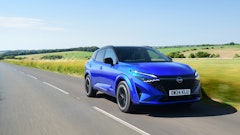
What was once a frumpy electric hatchback has grown into a handsome, comfortable and good-to-drive small SUV in the new Nissan Leaf. The boot could be a bit bigger, that being said.
It’s certainly better looking than any of the Leafs which came before it, because the coupe-SUV body shape is well-proportioned and sleek, while the front light bar gives it a properly futuristic, aerodynamic look.
The cabin is even better to behold, especially in the funky optional shade of purple and off-white. There are loads of padded surfaces up high, including the wraparound dashboard, with a panel which juts out to contain the twin displays and climate control panel.
There’s plenty of storage space, too, and it’s easy to find a good driving position thanks to the comfortable front seats. Rear space, however, is a bit cosy for taller occupants and the 437-litre boot is smaller than in most alternatives.
Range varies from 270 miles in the entry-level model to 375 miles in upper trim level cars with the bigger battery under the floor.
It’s a great car to drive, especially around town where the suspension absorbs bad roads with ease. It’s comfy on the motorway too, save for some wind noise, but it’s far from fun on a country lane.
Sell your car
no fees, no faff
6,000+ dealers are waiting to bid on your car.
Find out what it's really worth today.
The Renault 4 E-Tech is a retro-styled hatchback-cum-SUV which is mechanically similar to the excellent Renault 5. It looks awesome, it’s good to drive and it’s a genuinely desirable small electric car - all while being affordable, too.
Retro touches such as the boxy silhouette, chunky cladding and light shapes have been brought bang-up to date, while the swollen arches and big wheels give the little Renault a lot of road presence.
Taken from the Renault 5, the two-tier dashboard and body-hugging seats are old-school in a good way, and you can opt for fabric or leatherette upholstery in your Renault - both of which are supple to the touch.
The Google-based infotainment system is better than you’ll find in most small cars, so much so that you don’t need to rely on the standard-fit Apple CarPlay or Android Auto. It’s easy to get comfortable up front, but the back seats leave a little to be desired - even if there’s more space than a Renault 5. The 420-litre boot is down on a Cupra Raval.
All trim levels come with a 52kWh battery for 250 miles of range, which is on par with similarly-priced cars but is a bit behind top-spec alternatives.
It’s not all style and no substance, as the Renault 4 isn’t only comfortable and refined around town and on the motorway, but it’s surprisingly fun and a properly good performer on a country lane - even if its chunky looks might make you expect otherwise.
The iX3 might have a familiar badge, but this new iX3 really is all new, sharing hardly anything at all with other current models. It electrical gubbins will go on to underpin several other new electric models, including next year’s all-electric new i3. No pressure then…
The key to the iX3 is its big 108kWh battery, which is not only more efficient and faster-charging than BMW’s previous designs (up to 400kW of DC charging power) but it just simply gives you more range. Lots more range.
This iX3 has a claimed range of 500 miles. And in the real world? Well, after a long day’s test driving, up and down fast-flowing mountain roads, through narrow city and village streets, and with a lengthy blast at motorway speeds, we got home with 250 miles still showing on the dashboard.
Speaking of that dashboard, it’s the iX3’s best trick. The new ‘Panoramic View’ screen moves up to the base of the windscreen and stretches across the full width of the car, and it works brilliantly. The new central touchscreen is closer to the driver and so easier to use (although we’d really love to see a few more physical buttons). Space is good front and rear (the driver’s seat could do with a bit more adjustment) and the boot holds 520 litres, with a small ‘froot’ storage area in the nose.
It feels like a proper BMW, with surprising agility and a firm, but beautifully controlled, ride quality. Plus, it has smaller grilles than any recent BMW SUV, so that alone makes it a winning choice.
8. Fiat Grande Panda E
Fiat Grande Panda Electric reviewTrust Fiat to take the basic bones of the Citroen C3 and the Vauxhall Frontera, and turn them into something way more cute and stylish. The Grande Panda Electric might share its basic structure and batteries with those French and German cousins, but the styling on the outside — with its groovy Lego-block lights and ‘Panda’ embossed on the side panels like a pair of 1980s jeans — is pure Fiat, and way more interesting than the looks of the other two.
There’s also some genuine innovation going on here, with a clever built-in charging cable (for slow AC charging) that retracts back into the car like the flex on a vacuum cleaner. Why hasn’t anyone else thought of that?
The small 44kWh battery does mean that your range is a bit limited, though — just 199 miles at best, and while the more expensive models get a groovy interior with ambient lighting and bamboo trim (pandas love bamboo) the basic models feel a bit cheap and built-down-to-a-price inside. Then again, the Grande Panda is built down to a price, and a sensible price at that. Plus it’s roomier inside than the more expensive Renault 4 or Renault 5, and the boot’s a decent size too.
It’s a great car around town — small, light steering, easy to see out of — but that steering means it’s less good on a twisty road, and it’s a bit short-legged for the motorway (maybe consider the hybrid version if that’s what you need).
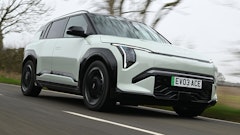
It’s not often that an MPV makes a top ten list - aside from the ten best MPVs, of course - but the Kia PV5 Passenger really is a brilliant car. It looks great, it’s ridiculously spacious inside and it’s half the price of its electric alternatives.
Not that it looks cheap, with some of the most interesting design touches of any car on sale. Yes it’s pretty much a box on wheels, but the high-set LEDs, low-set headlights, enormous windows and funky wheels give the PV5 a seriously futuristic look.
That doesn’t extend inside, however, with a simple dashboard topped by a small driver display, not-so-small infotainment screen and not much else. There’s an interesting sensation from behind the wheel, because the high driving position and enormous side windows going down to your knees make it feel as though you’re perched on the PV5, rather than in it.
It’s no surprise that the Kia is an enormously spacious car. Just look at it. There’s plenty of legroom in the back of the five-seater version. Seven-seater models are generous enough too, but lose boot space (758 litres) compared to the five-seater (1,330 litres) in the name of extra people-carrying capacity. Either way, that’s more than you get in pretty much any car, though.
Range varies from just 183 miles to 256 miles depending on battery size, but no matter which you choose it’s a very easy car to drive in town as it’s not actually that long or wide. It’s a bit less comfortable on the motorway, but not out of place, while being fine to drive on a twisty road - if nothing more.
10. BYD Seal
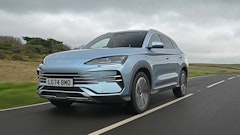
BYD Seal reviewIt may be one of the brand's oldest cars on sale in the UK, but the Seal is still the best BYD you can buy - and it’s not even close. It’s stylish, very well-equipped and properly good to drive, but it is pretty pricey compared to most alternatives.
At least it looks the part, with a sleek design that means this is one of the most attractive saloon cars around. The pointy lights, intricate rear light bar and cool LED details in the front bumper all look right at home on the well-proportioned silhouette.
The interior is positively unhinged by comparison, but in a good way, with an ultra-curvaceous dashboard which flows and ebbs its way around the large infotainment and driver displays, carrying through onto the door cars. The low-set driving position feels nice and sporty while you’ll find soft-touch leatherette and suede almost everywhere inside.
Rear seat space could be better, but you’ll be able to fit four six-foot adults in without too much fuss, so long as the rear two aren’t claustrophobic. The 485-litre boot is big enough, but massively down on the Tesla Model Y and the boot opening is a bit small.
There’s a single, 83kWh battery choice for the Seal, which you can have with either rear- or four-wheel drive for a claimed range of between 323 and 365 miles. You’ll struggle to see that in the real world, and newer alternatives can go much further on a charge.
Fortunately, the Seal is brilliant to drive. It’s comfortable in town, quiet on the motorway and properly capable on a twisty road.
Factors to consider when buying an EV
Budget
Work out how you'll finance the purchase and what you can afford for monthly payments. Additionally, remember to factor in charging and insurance costs to get a complete picture of the total expenses.
Charging
The cost of public charging can be quite high so to keep costs down install a home charger and switch to an EV-friendly electricity tariff. If that's not an option, be aware that relying on public chargers could make running an EV more expensive than a petrol car.
Range
For most drivers, an EV's range will be sufficient, especially if you can charge at home for shorter trips. However, if you're a high-mileage driver, you'll want to choose a car with a larger battery for a longer range, which will be more expensive.
Browse all electric cars available on Carwow
Electric car FAQs
There are lots of people who are open to the idea of an electric car as their next car, but many still have unanswered questions about what making that transition will actually mean for them on a day-to-day basis. Where and when do I charge it? Will it be safe? Will running an electric car actually work out any cheaper in the long run? Will it actually be any better for the environment?
Read on for answers to all those questions and more, to see whether electric motoring really is for you.


