Best small SUVs 2026
High quality small SUVs from rated and reviewed dealers


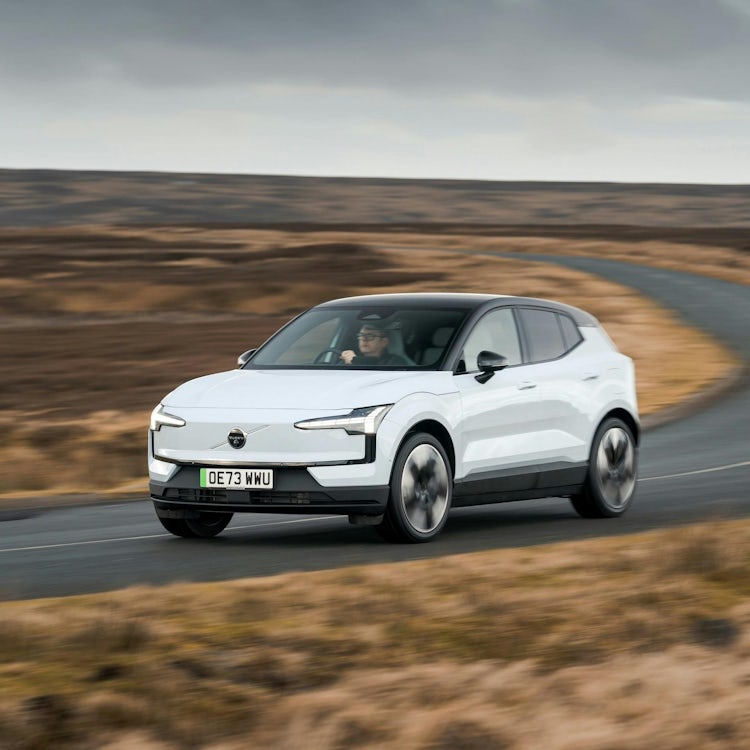

Best small SUVs 2025: our favourite city-friendly SUVs
It’s easy to see why the best small SUVs are so popular - they give you extra practicality over a hatchback with a higher driving position and usually more interior space, but without feeling too big and intimidating to drive.
Small SUVs have become the de facto family car of choice, thanks to that raised suspension making it so much easier to load items into the boot or children into child seats. But at the same time they’re still cheap to run, inexpensive to buy and they look good too with those slightly ruggedised elements such as beefy wheel arches.
That being said, you pay a price for style, as small SUVs cost more to buy or run than the equivalent hatchback, and often aren’t as nice to drive. But you can minimise those issues by choosing the right one for you. Cars like the practical Kia EV3, frugal Toyota Yaris Cross or fun-to-drive Ford Puma all have their own qualities that may suit you perfectly.
Carwow’s expert reviews team has rigorously tested every small SUV on sale today, putting them through their paces in everyday life, to make this list of the best around so that you can buy with confidence regardless of your budget.
The Dacia Duster is an excellent family SUV, even before you look at the fact it’s such good value for money.
You get funky, rugged off-roader looks that aren’t just for show – if you go for a four-wheel drive version the Duster will hold its own on all but the toughest of green lanes. However, it’s still stylish enough to hold its own at the school gates.
Basic models betray its budget roots somewhat – you don’t even get an infotainment screen, just a mount for your phone – but most models get a nifty 10.1-inch display that’s the best in any Dacia yet. It’s home to the reversing camera and gets all the usual smartphone connectivity too.
Again though the design impresses, because it’s rugged enough for life on the farm while also sporting cool, angular lines and a mix of materials so it doesn’t feel cheap and cheerful (unless you really start poking and prodding around).
There are loads of clever storage solutions, particularly the unique YouClip system that lets you mount stuff like clamps, phone holders and even lights for added practicality. You can comfortably carry five people and in two-wheel drive models the boot is bigger than pretty much anything else you might consider at this price, though you do lose some of that space in four-wheel drive models to accommodate the extra mechanical bits required.
If you’re coming to the latest Duster from the previous model, you’ll be impressed by how much better it is to drive. The suspension isn’t quite as soft and comfortable as before, but it does mean the car’s body rolls around less, so your passengers are less likely to get car sick.
The hybrid is the best bet if you’re driving around town, because the automatic gearbox and potential for silent, electric-only driving makes it easier and more refined to drive. On the motorway the car feels stable and secure, but accelerating up to speed can take a bit of effort whichever engine you go for – a Volkswagen T-Roc feels more refined in this regard.
In the future, we’ll look back and pinpoint a turning point where electric cars went mainstream – and the Kia EV3 could well be that car. There’s no wackiness and little compromise, just a reasonably priced, handsome car with the potential for excellent range.
The styling is head-turning without being too shouty, distilling the larger EV9’s big, imposing stance into a more family friendly package. Inside it’s smart and functional, with two large screens on the dashboard for your infotainment and driver information, split by a smaller display for your climate information. You can’t really see this third screen, because the steering wheel blocks it, but at least the climate controls use physical switches for ease of use on the move.
Practicality is excellent. There’s ample space for four adult passengers, and there are some neat tricks such as an extendable surface that can be used like a tray for your dinner or laptop.
Boot space is impressive too, because at 460 litres it’s bigger than most alternatives. You do only get the full capacity if you drop the floor to its lowest setting, which introduces a load lip over the bumper, but even if you move it to create a flat floor there’s decent space for a weekly shop.
On the road the Kia EV3 soaks up bumps really well, making it a comfortable way to get around. You don’t get the punchy acceleration of something like a Volvo EX30 Twin Motor, but there’s good enough performance for motorway stints, with little in the way of wind and road noise.
Good news, then, because the EV3 promises fantastic rage. Even the entry-level model goes 270 miles in official tests, but you can get a bigger battery and get up to 375 miles, which is hugely impressive. Charging speeds are okay, so you can do the 10-80% top up in the typical 30 minutes.
The only complaint here is that you don’t get a heat pump as standard. These help make the car’s heating system more efficient, helping to improve range in winter. You can only get a heat pump as an optional extra on top-spec models, which is a shame.
Skoda's larger Enyaq is a fantastic electric family car - super-practical, comfortable to drive and packed with clever touches. The Elroq is just like the Enyaq on a slightly smaller scale, which means it's even cheaper to buy, making it one of the best-value small SUVs around.
From a distance you might not even spot the difference between the Elroq and the Enyaq, as the two are very similar in style from the front. The changes come round the rear, where the Elroq is shorter with a more pert behind. That means slightly less boot room and rear legroom, though it's still excellent - more 'very spacious' rather than 'utterly palatial' like it is in the Enyaq.
You certainly get enough space for a small family and all their kit and clobber, plus some really neat storage touches - the net on the underside of the parcel shelf to store the car's charging cable is one of those 'how did nobody think of this before' ideas.
The Elroq is also really comfortable to drive with soft suspension that irons out the bumps. It's a great long-distance cruiser and fantastic to pilot through town thanks to a tight turning circle and nice light steering.
Longer trips aren't out of the question, either. Even the entry-level model will do 230 miles on a charge, while the longest-range car can do 360 miles. That's not quite as much as the Kia EV3 or the Peugeot E-3008, but it's still an excellent figure and should translate to more than 300 miles real-world.
It can even charge at a rate of up to 175kW, which is nicely speedy and allows you to top up from 10-80% at a fast-charger in the time it'll take you to grab a coffee and pop to the loos.
A five-star Euro NCAP safety rating and good levels of standard equipment are the final feathers in the cap for this excellent electric SUV. It may be on the edge of 'small', but its price tag means you'll be considering it right alongside the Kia EV3 and Volvo EX30.
Sell your car
no fees, no faff
6,000+ dealers are waiting to bid on your car.
Find out what it's really worth today.
4. Toyota Yaris Cross
Toyota Yaris Cross reviewYou don’t have to run an electric car to benefit from low running costs – if you’re not ready to take the full EV plunge, the Toyota Yaris Cross has an incredibly economical hybrid engine that should see your fuel costs drop dramatically.
With its lifted suspension and black cladding, it has a hint of rugged SUV about it despite being a small city car. It’s hardly a head-turner but the Yaris Cross is a good looking thing.
The interior is a touch plain – a Peugeot 2008 is much more visually interesting inside – but you get some nice soft-touch plastics and solid build quality. It’s just about spacious enough for four passengers, and the boot sits around the middle of alternatives – at 397 litres it’s bigger than a Vauxhall Mokka and smaller than a Skoda Kamiq.
It’s a bit more expensive than similar petrol-powered alternatives (the hybrid’s batteries add to the cost) but it does make up for this not only by being incredibly economical, but also by giving you lots of standard equipment. For example, many much more expensive cars don’t get adaptive cruise control on all models, but the Yaris Cross does.
One downside of that economical hybrid engine is the gearbox. It’s a CVT, which is a type of automatic gearbox. The benefit is that it helps reduce fuel use, but the downside is that it can be really noisy when accelerating. That said, at lower speeds around town, when you’re maximising use of the electric motors, it’s quiet enough.
The Tiggo 7 is really pushing the definition of a ‘small’ SUV - it’s about the size of a Nissan Qashqai, so don’t buy it if you want something to squeeze into a tight driveway. But the reason it’s on this list is because when it comes to price, it undercuts almost everything in its class - and it’s not just cheap for the sake of it, either.
In fact, all versions of the Tiggo 7 punch above their weight with a posh-feeling interior and lots of standard equipment. The closely-related Tiggo 8 (which has seven seats) is so good we even named it Carwow Car of the Year for 2026.
It’s worth avoiding the very entry-level Tiggo 7 - the one with the plain petrol engine - because this is noisy, sluggish and thirsty. Opt instead for the plug-in hybrid, which Chery optimistically calls ‘Super Hybrid’ and you get a car that can do over 50 miles on electric power alone, but thanks to some smart use of the battery and the engine can also manage more than 500 miles on a tank and returns very impressive long-distance economy. All for less than £30,000.
Add in all that standard kit - full LED lights, a rear-view camera, wireless smartphone connectivity and dual-zone climate control to name but a few - and it’s really difficult to argue with the value on offer here.
6. Volvo EX30
Volvo EX30 reviewBuying a small SUV doesn’t mean sacrificing a posh badge, and that’s where the Volvo EX30 comes in. Despite its relatively affordable price and teeny tiny dimensions, it still packs that famously posh Volvo front end – Thor’s Hammer headlights and all.
It’s slightly less convincing inside, though it does give the impression of being deliberately minimalist rather than simple because of cost cutting. There are plenty of cheap plastics, but they’re mixed in with a cool mix of materials, such as the sustainable textiles that cover the doors and run the full width of the dashboard.
You get a portrait-oriented touchscreen that controls just about everything – and that’s the main complaint about the EX30. There are very few physical buttons, so even basic functions like moving the steering wheel or opening the glovebox require the use of the touchscreen, which is unintuitive and tricky to do on the move.
Roominess is only really good if you’re in the front, though. Those in the back will find kneeroom extremely limited, and if you fit a child seat those in the front might have to move forward to make space. The boot isn’t particularly big either, so it doesn’t make the ideal family car.
If that doesn’t put you off you do get to enjoy one of the best-driving small SUVs around. Whichever version you go for the Volvo EX30 is comfortable and impressively refined on the motorway. It’s also good fun on a twisty road, particularly if you go for the ridiculously quick Performance model.
The Renault Captur has been given a glow up recently, making it one of the more chic small SUVs in this list. The arrow-shaped daytime running lights and redesigned bumpers have worked wonders.
As has the introduction of a Google-based infotainment system. It’s one of the simplest car touchscreens to use, benefitting partly from Google’s Android knowledge, but also because there are still physical buttons in the cabin, which are much easier to use on the move than digging around in confusing touchscreen menus.
The display is sharp, the layout is intuitive, and you get Google apps built in as well as Google Assistant voice control, which works brilliantly.
Outside of the infotainment system the interior design is fairly basic, but everything feels quality to the touch and well screwed together. Rear seat space is adequate, but tall passengers are likely to complain on a long drive.
However, the trade off is a massive boot – in its basic configuration you get up to 484 litres of space, which is already bigger than a Volkswagen T-Cross, but the rear seats slide forward to open 616 litres. Great if you need extra space and don’t have anyone in the rear seats.
Around town the Captur is a doddle to drive thanks to light controls and good visibility. If you can afford the extra for the hybrid engine it’s worth it, because it’s economical and means you can cruise around at low speeds in electric mode.
8. Toyota C-HR
Toyota C-HR reviewThe Toyota C-HR has some real stand-out styling – particularly in one of its brighter paints, there’s no danger of losing it in a car park.
However, underneath the sharp angles and bold, C-shaped headlights is a fairly simple but appealing recipe: a car that’s comfortable and easy to drive with a hybrid engine that’s really good on fuel. It shows you can be sensible and stylish at the same time.
Inside, the cabin looks really smart and feels suitably posh in the front, but it’s a different story in the back, which is full of cheap-feeling plastics. Space is okay but the small windows make it feel a bit dark for rear seat passengers.
The boot isn’t particularly big either, with a maximum of 388 litres if you go for the 1.8-litre self-charging hybrid, dropping to just 310 litres in the plug-in hybrid. You can get a Nissan Qashqai for a similar price with a 504-litre boot.
As with most of the hybrids on this list, the C-HR is at its best around town where you can maximise electric range and keep your fuel costs down. There’s a plug-in hybrid option too, which is ideal if you do a lot of shorter journeys and can charge the batteries regularly.
That’s not to say you shouldn’t undertake long journeys in the C-HR. At motorway speeds it’s comfortable and there’s not much wind or tyre noise to contend with. The engine gets a bit shouty when you accelerate, though.
Most of the small SUVs on this list prioritise comfort and being easy to drive around town, but the Ford Puma sacrifices some of this in order to be genuinely good fun to drive on a twisty road.
A major update in 2024 saw the Puma get an all-new interior, but while technology levels increased with a big, new touchscreen on the dashboard, the design, ease-of-use and material quality have taken a step back.
The screen is sharp and fairly responsive, but it almost feels too big for a car of this size, and now you have to control most functions, including the climate controls, on the screen instead of using physical buttons. This can be a real pain on the move.
Space and storage is pretty good up front, but those in the back are going to find it a tight squeeze. Fortunately, the boot is massive to make up for that – at 456 litres it’s bigger than almost any other small SUV. You also get a nifty storage box under the boot floor, which is useful for hiding valuables, or extending the boot floor to carry tall items. It has a plug in the bottom too, so you can chuck muddy boots in after a walk and hose the space down.
It really stands out on a fun road. It jiggles over bumps in town more than alternatives, and it’s a bit noisier on a motorway, but nothing else in this list is quite as capable on a winding country road.
The Citroen e-C3 isn’t just a good small SUV, it’s actually one of our favourite electric cars full stop. The reason being that it proves EVs don’t have to be expensive to be good, even if there are a few concessions required to keep the price down.
It somehow manages to blend the imposing, blocky look of a proper off-roader with a hint of cuteness, like a toddler wearing boxing gloves.
It’s a similar story inside, because although you won’t confuse it for a luxury car any time soon, there’s not a sea of black plastics like you get in many budget cars. The levels of tech and the practicality on offer are both very reasonable.
It’s battery technology where you have to make a little compromise for the price. The official range is 199 miles, which isn’t terrible but does make the e-C3 more of an urban commuter than a road trip companion.
On the road the Citroen e-C3 redeems itself, because it’s excellent for driving around the city.
Despite its size and relatively low power output, it does a good job of keeping up with motorway traffic too. The soft suspension means it’s comfortable for long drives if you do want to test the range, and wind and road noise aren’t too intrusive either.
Factors to consider when buying a small SUV
Size
It might seem obvious, but small SUVs tend to not be the most practical cars. Front seat space is usually not too bad, but often you have to make a choice between rear seat space or a big boot. Some cars, such as the Renault Captur, come with sliding rear seats so you can choose for yourself. Regardless, you might find that a small SUV doesn’t actually suit your needs, particularly if you regularly carry adults or have lots of luggage – check out our list of the best SUVs of all sizes if you need something a bit bigger.
Cost
Most small SUVs represent pretty good value for money, but it’s always a good idea to shop around for deals, whether you’re buying outright, financing or considering leasing. When you’re budgeting for a new car, remember to also consider running costs, such as fuel, insurance and taxes.
Fuel
When buying your small SUV, take the time to think about what fuel type is the best for you. Electric cars are well-suited to being city cars, but they’re only worth it if you have somewhere to charge cheaply, such as at home or work. Smaller EVs tend to have smaller batteries with lower ranges, so aren’t ideal if you do a lot of miles. Petrol power could be a good option if you can’t charge an electric car or regularly do long journeys, while a hybrid car is a good compromise between the two.
Browse all SUVs
Advice about small SUV cars


Compact SUVs FAQs
SUVs by make
- Alfa Romeo SUVs
- Audi SUVs
- BMW SUVs
- Citroen SUVs
- Cupra SUVs
- Ford SUVs
- Honda SUVs
- Hyundai SUVs
- Jaguar SUVs
- Jeep SUVs
- Kia SUVs
- Land Rover SUVs
- Lexus SUVs
- Maserati SUVs
- Mazda SUVs
- Mercedes-Benz SUVs
- MG SUVs
- Nissan SUVs
- Peugeot SUV
- Porsche SUVs
- Renault SUVs
- SEAT SUVs
- Skoda SUVs
- Suzuki SUVs
- Toyota SUVs
- Vauxhall SUVs
- Volkswagen SUVs
- Volvo SUVs