Best plug-in hybrid cars
High quality hybrid cars from rated and reviewed dealers



Best PHEVs of 2026: our favourite plug-in hybrids for low cost motoring with no range anxiety
The best plug-in hybrid cars aren’t the super-expensive, electric range-lacking things they once were. And with such a wide range of body styles to choose from, there’s a PHEV for everybody.
From enormous SUVs such as the Jaecoo 8 and MG S9 PHEV to the small and affordable BYD Dolphin G hatchback - with the likes of the Audi A3 and Skoda Superb Estate splitting the difference - you’re spoilt for choice when it comes to plug-in power these days.
Our expert reviews team have comprehensively tested every PHEV on sale in real-world scenarios, from the city to the motorway and everywhere in between. Here are their ten favourites:
1. Chery Tiggo 8
Chery Tiggo 8 reviewThe Chery Tiggo 8 might have a silly name, and its styling is a bit generic on the outside (it’s like one of those kinda-familiar looking fake cars in Grand Theft Auto…) but this is such an impressive all-rounder, and at such a good price, that it strolled off with 2026 Carwow Car Of The Year award. Makes a change from the sort of big, bland Chinese SUVs that we’re used to, which arrive with a fanfare of sharp pricing and then quickly get forgotten about.
The true high spot is the Tiggo 8’s interior, which honestly looks and feels as if it could have come from a premium European brand. Quality levels are very high, the seats are comfy and the whole thing is just really impressive. OK, so the touchscreen is rather fiddly and there aren’t enough proper buttons, but then that’s true of more or less everything these days.
There’s loads of space in the middle row of seats, and useful third row space too, although back there it’s really more for smaller kids than for adults. Rear seats down, the boot holds up to 700 litres which is loads, even if a Skoda Kodiaq holds more, but you do lose almost all that boot space if the back seats are in use — then space shrinks to just 117 litres, which is only enough for a few shopping bags.
The Tiggo 8 does trip up a bit when it comes to its driving experience. The plug-in hybrid engine is pretty great — and it has 56 miles of electric range — but the Tiggo 8 is noisy on the motorway, and feels out of its depth on a twisty road.
Almost all can be forgiven at this price, though. The Tiggo 8 doesn’t just undercut European alternatives, it smashes them, costing about as much as a mid-spec VW Golf. That’s for a seven-seat, plug-in hybrid SUV.
With that impressive combo of space, practicality, quality, and price, the Tiggo 8 really goes to show that you can’t just dismiss a car because it has a silly name — this is a genuine world-beater from Chery.
2. Jaecoo 8
Jaecoo 8 reviewThe Jaecoo 8 is the brand’s biggest, most expensive and outright best car on sale. It’s a huge six- or seven-seater with a pretty posh interior, imposing styling and loads of electric-only range. The back seats are pretty cramped, however and the third row is pretty useless.
Still, it looks quite good. Where the smaller Jaecoo 5 and Jaecoo 7 are all boxy and faux-Range Rover-y, the Jaecoo 8 channels its inner American SUV with its long roofline, massive wheels, enormous grille and aggressive headlights. Pretty it ain’t, but the Jaecoo 8 manages to look more expensive than it actually is.
Step inside and you’ll find the poshest cabin Jaecoo has produced to date, too. Taking clear - ahem - ‘inspiration’ from the Mercedes GLE, the dashboard features a wide dual-screen setup, fancy squared-off air vents and lashings of leatherette in most of the places you’ll poke and prod on the day-to-day. We’re particularly keen on the orange upholstery, it’s weird enough to be interesting without being too in-yer-face.
It’s a shame the infotainment is a headache to use, as it’s fairly slim with convoluted menus and submenus which are annoying to navigate on the go.
Practicality is a mixed bag. You can have the Jaecoo 8 as a seven-seater with a sliding middle bench or as a six-seater with massaging captain’s chairs, which is posh but…why? Second-row space is adequate, rather than generous, and the third row is cramped. It’s also near-impossible to clamber into them in the six-seater model.
Fold those rearmost seats flat, however, and you get a huge 738-litre boot, though with all the chairs in place that drops down to a pretty small 110 litres instead.
There’s a single engine variant for the Jaecoo 8, but it’s fantastic so we’re not complaining about the lack of choice. It’s a 1.5-litre plug-in hybrid with an impressive 83 miles of electric-only range, and even with a flat battery you’ll see around 47mpg on the motorway.
Around town the Jaecoo 8 is largely comfortable, though rattled about by rough roads. It easily accelerates up to the national speed limit, but it’s not as quiet at a cruise as you might hope, and it’s pretty wobbly around bends on a twisty, bouncy country lane.
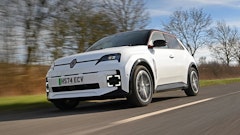
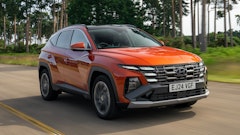
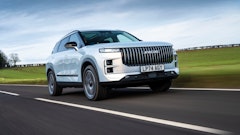
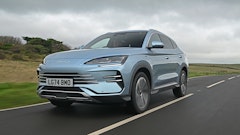
3. MG S9
MG S9 reviewThe MG S9 is an enormous seven-seater SUV for the price of a mid-range hatchback, which makes it phenomenal value for money and a great choice of family car. Not only that, but it’s full of standard kit and very spacious inside - though you have to live with an irritating infotainment system and suspension that can rattle you around town.
At least it looks interesting, though it’s hard not to turn heads when you’re driving around in a five-by-two-metre bungalow on wheels. Okay so the silhouette is a bit generic from a distance, but the broad grille, full-width rear light bar and liberal application of chrome help it look more expensive than its bargain price tag suggests.
It’s a similar story inside, because the S9 has the poshest interior of any MG yet - aside from the posh, sporty Cyberster convertible. The upright dashboard features a pair of 12.9-inch screens and a welcome row of easy-to-use physical climate buttons beneath. Poke and prod around and you’ll spot a few cost-cutting measures in the hard plastics on the door cards and centre console.
The software is not only painfully slow but also features fussy menus which are annoying to navigate. Overall, however, it’s a pleasant place to sit with a decent amount of leatherette in the right places, and the steering wheel is nice to hold.
Where the S9 shines brightest is interior space, because it’s seriously roomy - not just up front. The middle-row seats slide, recline and offer heaps of legroom while the third row even comes with adjustable backrests. Tight headroom means seats six and seven are strictly best kept for the kids, though.
With all seven chairs in place you get an acceptable 332-litre boot, but fold that rear row flat and cargo capacity swells to a mammoth 1,026 litres.
The 1.5-litre petrol plug-in hybrid engine can manage 62 miles of electric-only range, which isn’t as much as some alternatives but is a decent figure nonetheless. You'll only manage 30mpg with an empty battery, however.
It’s not all that comfortable, either, as the S9 thuds its way over bumps and potholes in town - only really settling down on the motorway. At least it’s fairly composed on a twisty lane.
4. Skoda Kodiaq
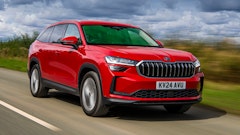
Skoda Kodiaq reviewBig and dependable, that’s the Kodiaq way. Skoda’s biggest car is firmly in the mould of the Czech company’s best products, in that it doesn’t try to do anything too complicated, but instead just gets on with offering the most amount of space and practicality for the money.
Mind you, that’s more money than you might be used to. Skoda has bumped up its prices of late, and the Kodiaq plug-in hybrid is pricier than most of the other models in its lineup. Oh, and you can’t have this plug-in version with seven seats, because the battery takes up the space where the extra row in the boot would go. Which is a shame, but we guess you can’t have everything.
What you can have is a plug-in hybrid that mixes a really useful electric range — 62 miles on a full charge is Skoda’ claim, and you should get around 45 miles of that in real-world driving — with fuel economy on a longer run that won’t break the bank. In fact, the Kodiaq is one of the more economical PHEVs when you’re taking it on a long drive.
It’s also very good to drive, although not in a driver entertainment sense. In fact, the Kodiaq is pretty dull from behind the wheel, but then were you expecting sports car responses from a roomy family SUV? What the Kodiaq does really well is to give you long-distance comfort with decent around-town usability for a big car, thanks to decent visibility (although a Peugeot 5008 is comfier over bumps than the Skoda).
The cabin looks great, and the multi-function rotary controls below the big touchscreen make life much easier, as they give fast access to the likes of air-con, seat heating, and stereo volume and you can use them without taking your eyes off the road as much. The only downside is that the cabin doesn’t feel quite as well put-together as that of the old Kodiaq, but the space, comfort, and practicality make up for that.
5. BYD Dolphin G
BYD Dolphin G reviewThe BYD Dolphin G wears the crown of ‘smallest and cheapest PHEV on sale.’ Not only does that make it stand out in a market dominated by large SUVs, but it offers great value while still being well-equipped - if feeling a bit cheap in places.
It certainly doesn’t stand out in styling terms, though. The Dolphin G is one of the most generic-looking small hatchbacks on sale, even if you can buy it in a violently orange paint shade. There’s nothing wrong with its styling, but not a whole lot right with it either.
At least the cabin punches well above its price tag with a neatly designed dashboard that’s solidly built. There’s a slick 12.7-inch central touchscreen that gets Google apps built-in on mid-spec trims, and it’s pretty easy to navigate, too. There are a few scratchy plastics dotted around, but you can forgive it for the price.
Passenger space is impressive, with more than enough legroom for four six-foot tall adults to sit comfortably. Cargo capacity is equally impressive, with a 425-litre boot that makes it one of the most practical boots of any small hatchback.
The 1.5-litre plug-in hybrid engine only manages 25 miles of electric range in entry-level cars. Posher trim levels can go as far as 65 miles, however, and even with no charge you can expect almost 70mpg on a run.
Around town the Dolphin G feels just like an EV, as it’s smooth and easy to drive. It could do with softer suspension - you get jiggled around a little - but it’s more comfortable on the motorway and planted enough for drama-free country lane commutes.
6. Omoda 7
OMODA 7 reviewThe Omoda 7 isn’t the cheapest or poshest Omoda going, but it is the best. It pairs a stylish cabin and generous interior space with a cracking plug-in hybrid powertrain at a reasonable price, but the infotainment is a headache and there are some nasty interior materials.
At least it looks good, for a family SUV. The fairly low-slung silhouette is complemented by an aggressive sharknose front end and distinctive lightning-bolt rear light bar, helping it to stand out (a bit) from other, similarly-sized SUVs.
The cabin is hardly revolutionary and it’s pretty minimalist, but there are plenty of padded surfaces which elevate things, and it all feels pretty well screwed-together. It’s a shame the faux leather on the dash is unconvincing to the touch, and there are scratchy plastics lower down.
You might get annoyed by the infotainment, too, as there are a few too many menus to navigate to change simple functions - with no physical shortcut buttons either.
Cabin space is very generous, easily accommodating tall adults in both rows while the huge 639-litre boot comfortably swallows up enough clobber for a family road trip. It’s quite shallow, though.
The 1.5-litre plug-in hybrid engine is smooth and peppy, with a handy 56 miles of electric-only range.
Light steering and sharp brakes make the Omoda 7 easy to drive in town, even if the fairly stiff suspension can shake you about over rough sections. It’s a shame that it isn’t as quiet or refined on the motorway, but at least the Omoda handles twisty roads with ease.
Sell your car
no fees, no faff
6,000+ dealers are waiting to bid on your car.
Find out what it's really worth today.
7. Toyota RAV4
Toyota RAV4 reviewThe Toyota RAV4 is a staple family SUV, now in plug-in hybrid form. It’s super fuel efficient and spacious inside, but the cabin just doesn’t feel posh enough for the hefty price tag.
At least it looks rugged, with a baby Land Cruiser vibe thanks to the chunky wheel arches, sharp angles and aggressive lights. It’s boxy and unashamedly leans into the ‘Utility’ part of Sports Utility Vehicle.
The cabin, unfortunately, does the same. Sure there are some lovely, easy-to-use buttons and knobs around the place but it’s all just so grey, and miserable. Material quality is hard-wearing and scratchy, as opposed to plush.
At least it’s very spacious inside, on account of its boxy proportions. Rear passenger space is particularly impressive, though there isn’t much thigh support on account of the under-floor batteries. Those batteries eat into the boot space too, as there’s just 446-litres to fill.
Electric range is super impressive at 85 miles, and even with a discharged battery you’ll see close to 60mpg from the petrol engine alone. That’s some good going in a car this big and heavy, Toyota.
The RAV4 is easy to drive in town thanks to great visibility from a high seating position and comfortable suspension, but the CVT automatic gearbox is particularly noisy when you step on it to get up to motorway speeds. Once you’re there it’s smooth and quiet, while country lanes are taken in the Toyota’s stride.
7. Hyundai Santa Fe
Hyundai Santa Fe reviewThe Hyundai Santa Fe is an excellent car, but it's slightly better in its self-charging hybrid form. The plug-in is still a very sound choice, and certainly the pick of the two if you want it as a company car.
With an official range of 34 miles on a charge, the Santa Fe PHEV isn’t up there with the best for all-electric range, but it can still cope with most commutes, if you keep charging it up every day.
The rest of the car is just so good that a slightly lacklustre battery capacity is a small thing to forgive. The Santa Fe stands out from the crowd with its retro-futuristic styling, which manages to make an incredibly blocky silhouette seem cool and appealing rather than strictly utilitarian.
Being a big box means fantastic practicality, too. The Hyundai Santa Fe PHEV seats seven, and while the boot is modest with all three rows up, but has plenty of room in five-seat mode, and storage for smaller items is fantastic.
One of the best things about the Santa Fe is that it feels like a Land Rover Defender - it has the same air of premium, rugged quality about it. Yet it’s much cheaper - hardly Dacia-level pricing, but much more affordable than something with a posh badge.
Being comfortable to drive and having a high-quality dashboard that’s easy to use are just extra factors that make the Hyundai Santa Fe not just a great PHEV, but one of the best SUVs you can buy right now.
8. MG HS
MG HS reviewThe MG HS SUV, when fitted with its plug-in hybrid engine, is just about the most cost-effective company car you can buy short of a full EV. It’s so exceptionally affordable because it hits the three factors that affect benefit-in-kind tax rates.
Firstly, it has a low purchase price - even the range-topping Trophy model is less than £34,000, while the SE is cheaper still. Secondly, it emits - officially - less than 50g/km of CO2. And it’s capable of 75 miles on a charge, tipping it just over the threshold to pay the 5% rate of company car tax, as opposed to most alternatives that fall into the 8% or 12% bands.
Even as a private buyer, that exceptional battery capacity and low purchase price mean that you can drive the HS PHEV more like an electric car most of the time, until you’re on a particularly long journey where the 1.5-litre petrol engine will kick in.
You can’t expect such an affordable car to feel like a Range Rover inside, but the HS doesn’t embarrass itself on this front either. The dashboard looks smart and apart from a few fiddly onscreen controls is largely easy to use.
And while the MG HS isn’t going to feel like a sports car in the corners, it’s really quite comfortable on a long drive.
9. Audi A3
Audi A3 Sportback reviewThe whole point of a plug-in hybrid is that it should be an electric car on most days, and only resort to its petrol engine when you need it for a long journey. So it stands to reason that a car with a longer electric range is much more flexible and much more likely to meet that standard. Enter the Audi A3 TFSI e, which can run for a claimed 88 miles on electric power alone.
OK, that's the claim, but it stacks up well in the real world. In fact, we’d be amazed if you got less than 65-70 miles out of one charge, and when the petrol engine does kick in, long-range fuel economy is entirely reasonable. Obviously, the A3 is best kept in town to stretch that electric range as far as possible, but it’s still quite good to drive on the open road, in spite of the extra weight, although it’ll never match the fun factor of the BMW 1 Series.
Inside, the cabin is really well-made, although some of the touchscreen interface is needlessly cack-handed, and the battery eats dramatically into boot space, so this is far from the most practical A3 you can buy. You also can’t have the TFSI e system in the handsome Audi A3 saloon, which is a bit of a shame.
10. BYD Seal U
BYD Seal U reviewWe’re starting to think that the big BYD Seal U plug-in hybrid SUV might actually be a bit under-priced. Put it this way; this massive, roomy, family SUV with a 43 mile electric range (or 77 miles if you upgrade to a Comfort model) can cost as little as the top-spec BYD Atto 2, which is a teeny-tiny electric crossover.
Is it worth grabbing one before BYD realises that it’s selling the Seal U too cheaply? Maybe so, as there’s a lot to like about this tallest BYD. It’s hugely roomy inside, with acres of legroom and headroom in the back seats. Up front, there’s the typical BYD dash — big screens, with the middle one rotating for reasons we can’t work out — and everything’s bolted together really well. Certainly, BYD’s cabin quality is up there with Toyota, if not quite Audi nor BMW.
The boot’s a bit on the small side, but you’d live with it and more importantly the Seal U isn’t one of those PHEVs that mugs you at the pumps if you dare to go on a long journey. Figure on getting around 45mpg on long motorway runs. You can — technically — fast-charge the Seal U too, but only at 18kW, which hardly counts.
It’s just a shame that none of this is backed up with an enjoyable driving experience. The Seal U just kind of flops about the place, with suspension that’s too soft and steering that’s too sluggish. The engine gets a bit too noisy at times too.
Factors to consider
The most important thing to consider when buying a plug-in hybrid is whether you have access to cheap charging. If you don’t, the battery will run itself flat and then the petrol engine has to work harder to carry the heavy batteries around, at which point you’d be better off getting a self-charging hybrid, or even a simpler petrol or diesel model. You should also consider if a hybrid is even right for you – hybrids tend to offer poor efficiency on longer drives, so if you do big miles every day then petrol and diesel can offer lower running costs.
Factors to consider when choosing a plug-in hybrid car
Charging access
Unlike a conventional hybrid, most PHEVs don’t have the option to charge the batteries directly off the engine. Some do, but it drastically reduces fuel economy in the process. While all PHEVs have a degree of regenerating braking to replenish your electricity reserves, you won’t see major cost savings compared to a petrol car if you run the battery flat - so make sure you can keep your car charged.
Petrol or PHEV?
If you don’t do many miles behind the wheel and you’re buying a car privately then you’ll be better off with a highly economical petrol or self-charging hybrid car instead of shelling out thousands more for a plug-in hybrid. You need to do thousands of miles in electric mode to offset the additional purchase price.
High performance or fuel efficiency?
Just because plug-in hybrid cars have gained popularity for their fuel efficiency, doesn’t mean that they’re all hypermiling heroes. Cars such as the BMW M5, Porsche Panamera e-Hybrid and Mercedes SL63 S E Performance use the extra power from their hybrid systems for enough shove to keep up with supercars - as well as to potter around town quietly.
Browse all hybrid cars
Advice about plug-in hybrid cars


Hybrid cars by make
- Audi hybrid cars
- BMW hybrid cars
- Citroen hybrid cars
- Cupra hybrid cars
- Dacia hybrid cars
- Ford hybrid cars
- Honda hybrid cars
- Hyundai hybrid cars
- Jaguar hybrid cars
- Jeep hybrid cars
- Kia hybrid cars
- Land Rover hybrid cars
- Lexus hybrid cars
- Mazda hybrid cars
- Mercedes-Benz hybrid cars
- Mg hybrid cars
- Nissan hybrid cars
- Peugeot hybrid cars
- Porsche hybrid cars
- Renault hybrid cars
- Skoda hybrid cars
- Suzuki hybrid cars
- Toyota hybrid cars
- Vauxhall hybrid cars
- Volkswagen hybrid cars
- Volvo hybrid cars