Best plug-in hybrid cars
High quality hybrid cars from rated and reviewed dealers



Best PHEVs of 2026: our favourite plug-in hybrids for low cost motoring with no range anxiety
Electric cars may be the future of motoring - but they’re not for everyone. The best plug-in hybrid electric vehicles (or PHEVs) offer many of the advantages of a fully electric car, but also address some of the potential downsides.
Like all hybrids, PHEVs pair battery-powered electric motors with petrol or diesel power. However, where self-charging hybrids top the battery up using energy recovered through braking, plug-in hybrids can be topped up using external power.
One advantage is the fact that PHEVs tend to have bigger batteries than other hybrids, so you get a long range – over 70 miles in some cases. On top of this, if you charge using your electricity at home it’s much cheaper than relying on petrol alone.
Getting a hybrid system right is a complex process, so some are much better than others. To help you choose, Carwow’s expert reviews team has driven every model on sale and put together this comprehensive list of the best PHEVs on sale in the UK.
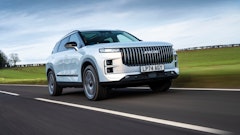
1. Chery Tiggo 8
Chery Tiggo 8 reviewThe Chery Tiggo 8 might have a silly name, and its styling is a bit generic on the outside (it’s like one of those kinda-familiar looking fake cars in Grand Theft Auto…) but this is such an impressive all-rounder, and at such a good price, that it strolled off with 2026 Carwow Car Of The Year award. Makes a change from the sort of big, bland Chinese SUVs that we’re used to, which arrive with a fanfare of sharp pricing and then quickly get forgotten about.
The true high spot is the Tiggo 8’s interior, which honestly looks and feels as if it could have come from a premium European brand. Quality levels are very high, the seats are comfy and the whole thing is just really impressive. OK, so the touchscreen is rather fiddly and there aren’t enough proper buttons, but then that’s true of more or less everything these days.
There’s loads of space in the middle row of seats, and useful third row space too, although back there it’s really more for smaller kids than for adults. Rear seats down, the boot holds up to 700 litres which is loads, even if a Skoda Kodiaq holds more, but you do lose almost all that boot space if the back seats are in use — then space shrinks to just 117 litres, which is only enough for a few shopping bags.
The Tiggo 8 does trip up a bit when it comes to its driving experience. The plug-in hybrid engine is pretty great — and it has 56 miles of electric range — but the Tiggo 8 is noisy on the motorway, and feels out of its depth on a twisty road.
Almost all can be forgiven at this price, though. The Tiggo 8 doesn’t just undercut European alternatives, it smashes them, costing about as much as a mid-spec VW Golf. That’s for a seven-seat, plug-in hybrid SUV.
With that impressive combo of space, practicality, quality, and price, the Tiggo 8 really goes to show that you can’t just dismiss a car because it has a silly name — this is a genuine world-beater from Chery.
2. Skoda Kodiaq
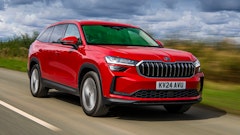
Skoda Kodiaq reviewBig and dependable, that’s the Kodiaq way. Skoda’s biggest car is firmly in the mould of the Czech company’s best products, in that it doesn’t try to do anything too complicated, but instead just gets on with offering the most amount of space and practicality for the money.
Mind you, that’s more money than you might be used to. Skoda has bumped up its prices of late, and the Kodiaq plug-in hybrid is pricier than most of the other models in its lineup. Oh, and you can’t have this plug-in version with seven seats, because the battery takes up the space where the extra row in the boot would go. Which is a shame, but we guess you can’t have everything.
What you can have is a plug-in hybrid that mixes a really useful electric range — 62 miles on a full charge is Skoda’ claim, and you should get around 45 miles of that in real-world driving — with fuel economy on a longer run that won’t break the bank. In fact, the Kodiaq is one of the more economical PHEVs when you’re taking it on a long drive.
It’s also very good to drive, although not in a driver entertainment sense. In fact, the Kodiaq is pretty dull from behind the wheel, but then were you expecting sports car responses from a roomy family SUV? What the Kodiaq does really well is to give you long-distance comfort with decent around-town usability for a big car, thanks to decent visibility (although a Peugeot 5008 is comfier over bumps than the Skoda).
The cabin looks great, and the multi-function rotary controls below the big touchscreen make life much easier, as they give fast access to the likes of air-con, seat heating, and stereo volume and you can use them without taking your eyes off the road as much. The only downside is that the cabin doesn’t feel quite as well put-together as that of the old Kodiaq, but the space, comfort, and practicality make up for that.
3. BMW M5 Touring
BMW M5 Touring reviewIf there’s one thing we need in this world, it’s love. If there’s another thing, it’s a 727hp plug-in hybrid four-wheel drive supercar with space for the family and a presumably very confused Labrador. It’s the BMW M5, but not as we have previously known it, because this one comes with some extra metalwork at the back end which turns it into a Touring estate.
Now, this generation of M5 is somewhat controversial. There are those who decry its heaviness (it is knocking on for the weight of a Land Rover Discovery III) and the fact that it uses batteries for some of its power. But then you can flip that equation and think that here is a car which, with some careful charging, can get you from one end of the week to the other while running on just electricity thank to a 40-odd-mile EV range, and then at the weekends you can unleash the mighty twin-turbo V8 beast within.
The M5 Touring does an incredible job of disguising its crushing weight (although you will really feel it under heavy braking, or trying to make the apex of a really tight corner) but most of the time it’s a leather-lined rocket ship with a practical boot and a real sense of devilish fun about it.
It’s not perfect, of course. Apart from the weight, there’s the sheer cost of it all, the fact that it’ll barely hit 30mpg on a long run, and the fact that — unlike all previous 5 Series Tourings — you can’t open the rear glass by itself (boo!). Still, these seem like minor issues when you’ve seen the acceleration times, and felt the sheer thrust when both electric motor and V8 are hauling together. So the M5 Touring — and the Touring is way more interesting than the saloon — is a flawed car, but a fascinating one, and a car whose flaws just seem to make it ever more interesting again.
4. Skoda Superb Estate iV
Skoda Superb Estate reviewThere are so few Ronseal cars around these days - but the Skoda Superb is one that does precisely what it says on the tin. As a large family estate, as a plug-in hybrid, and just generally as a car - it’s truly Superb.
Practicality is the main draw with the Superb. It has more legroom in the back than you’d find in most limousines - if you have a pair of rapidly growing teenagers who are 90% limb, they’ll be able to stretch out in comfort. There’s also a massive 510-litre boot, reduced from the standard car’s load area but still very impressive and capable of taking an entire family’s kit and clobber.
The Superb iV, Skoda reckons, is good for 84 miles on a charge - there aren’t many PHEVs which can go anywhere near that far. In the real world, that figure is more like 70 miles - but that’s still enough to tackle a fairly gruelling commute and still leave plenty in reserve.
And even if you’re undertaking a long journey with a discharged battery, the Superb’s 1.5-litre petrol engine is more economical than most - around 45mpg should be easily achievable at a cruise.
It’s packed with neat touches that make life just a little bit easier, too. As well as umbrellas in the front doors, you get an ice scraper in the filler flap, a clip on the windscreen to hold parking tickets, and even clever little nubs in the cupholders to grip bottles so you can open them one-handed.
Volvo’s big XC90 is a very old car now — its basic design dates back to 2014 — yet Volvo has done just enough to keep the XC90 looking and feeling fresh, and somehow it’s managed to remain on top of its game, even when so many newer designs have hit showrooms since it first arrived.
A big part of the appeal is the plug-in hybrid system, which not only gives you surprising power and a really surprising turn of speed (455hp and 0-62mph in just 5.4 seconds just sounds really weird in the context of a big safe Swedish seven seater) but also the potential for some serious electric-only running and impressive overall fuel economy.
Volvo claims a 44 mile range on one charge of the XC90’s battery, and while you’ll probably only get 30 miles of that in the real world, that’s enough to cover many people’s daily driving. And then you have the 2.0-litre petrol engine (which in fairness can get a touch noisy) for longer journeys, though fuel economy on a run can be pretty poor.
Inside, although the new touchscreen looks like something of an afterthought (well, it is…) the interior is still lovely, hugely spacious, and practical, not least because the XC90 is one of the few plug-in hybrids that keeps its full complement of seven seats. Ride comfort could be better, but the XC90 feels better in the corners than you’d expect. A very polished car.
Sell your car
no fees, no faff
6,000+ dealers are waiting to bid on your car.
Find out what it's really worth today.
6. BMW X5
BMW X5 reviewIf you’re happy to spend a fair chunk on your daily driver, then it’s difficult to find anything better than the BMW X5. BMW fits the X5 50e plug-in hybrid with a 3.0-litre six-cylinder instead which sounds great, has tons of power in reserve and is creamy smooth when you rev it, making it a pleasure to drive.
Even when the engine’s lying dormant and you’re running on electric power, things only get better. A huge battery pack means that even though the X5 is about the size of Buckingham Palace, it gets up to 67 miles on a charge - enough for even the most strenuous commute.
Whether you’re driving through town on electric power, cruising down the motorway with the petrol engine or blending the both to get the maximum power output - the X5 is fantastic to drive. It’s equal parts comfortable at a cruise and sharp in the corners, capable of disguising its size and weight to an amazing degree.
Sure, you’ll want a Range Rover for the ultimate in luxury, but the BMW X5 isn’t far behind in the comfort stakes, and has a far wider breadth of ability everywhere else.
The whole time you’ll be ensconced in a really excellent interior, too. BMW’s huge twin-screen infotainment setup is one of the best around, and material quality is sumptuous. It’s a shame that the plug-in hybrid X5 is only a five-seater, though - the diesel gets the option of a third row for small occupants, increasing flexibility.
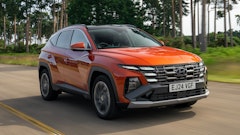
7. Hyundai Santa Fe
Hyundai Santa Fe reviewThe Hyundai Santa Fe is an excellent car, but it's slightly better in its self-charging hybrid form. The plug-in is still a very sound choice, and certainly the pick of the two if you want it as a company car.
With an official range of 34 miles on a charge, the Santa Fe PHEV isn’t up there with the best for all-electric range, but it can still cope with most commutes, if you keep charging it up every day.
The rest of the car is just so good that a slightly lacklustre battery capacity is a small thing to forgive. The Santa Fe stands out from the crowd with its retro-futuristic styling, which manages to make an incredibly blocky silhouette seem cool and appealing rather than strictly utilitarian.
Being a big box means fantastic practicality, too. The Hyundai Santa Fe PHEV seats seven, and while the boot is modest with all three rows up, but has plenty of room in five-seat mode, and storage for smaller items is fantastic.
One of the best things about the Santa Fe is that it feels like a Land Rover Defender - it has the same air of premium, rugged quality about it. Yet it’s much cheaper - hardly Dacia-level pricing, but much more affordable than something with a posh badge.
Being comfortable to drive and having a high-quality dashboard that’s easy to use are just extra factors that make the Hyundai Santa Fe not just a great PHEV, but one of the best SUVs you can buy right now.
8. MG HS
MG HS reviewThe MG HS SUV, when fitted with its plug-in hybrid engine, is just about the most cost-effective company car you can buy short of a full EV. It’s so exceptionally affordable because it hits the three factors that affect benefit-in-kind tax rates.
Firstly, it has a low purchase price - even the range-topping Trophy model is less than £34,000, while the SE is cheaper still. Secondly, it emits - officially - less than 50g/km of CO2. And it’s capable of 75 miles on a charge, tipping it just over the threshold to pay the 5% rate of company car tax, as opposed to most alternatives that fall into the 8% or 12% bands.
Even as a private buyer, that exceptional battery capacity and low purchase price mean that you can drive the HS PHEV more like an electric car most of the time, until you’re on a particularly long journey where the 1.5-litre petrol engine will kick in.
You can’t expect such an affordable car to feel like a Range Rover inside, but the HS doesn’t embarrass itself on this front either. The dashboard looks smart and apart from a few fiddly onscreen controls is largely easy to use.
And while the MG HS isn’t going to feel like a sports car in the corners, it’s really quite comfortable on a long drive.
9. Audi A3
Audi A3 Sportback reviewThe whole point of a plug-in hybrid is that it should be an electric car on most days, and only resort to its petrol engine when you need it for a long journey. So it stands to reason that a car with a longer electric range is much more flexible and much more likely to meet that standard. Enter the Audi A3 TFSI e, which can run for a claimed 88 miles on electric power alone.
OK, that's the claim, but it stacks up well in the real world. In fact, we’d be amazed if you got less than 65-70 miles out of one charge, and when the petrol engine does kick in, long-range fuel economy is entirely reasonable. Obviously, the A3 is best kept in town to stretch that electric range as far as possible, but it’s still quite good to drive on the open road, in spite of the extra weight, although it’ll never match the fun factor of the BMW 1 Series.
Inside, the cabin is really well-made, although some of the touchscreen interface is needlessly cack-handed, and the battery eats dramatically into boot space, so this is far from the most practical A3 you can buy. You also can’t have the TFSI e system in the handsome Audi A3 saloon, which is a bit of a shame.
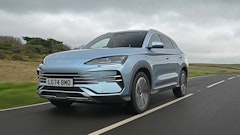
10. BYD Seal U
BYD Seal U reviewWe’re starting to think that the big BYD Seal U plug-in hybrid SUV might actually be a bit under-priced. Put it this way; this massive, roomy, family SUV with a 43 mile electric range (or 77 miles if you upgrade to a Comfort model) can cost as little as the top-spec BYD Atto 2, which is a teeny-tiny electric crossover.
Is it worth grabbing one before BYD realises that it’s selling the Seal U too cheaply? Maybe so, as there’s a lot to like about this tallest BYD. It’s hugely roomy inside, with acres of legroom and headroom in the back seats. Up front, there’s the typical BYD dash — big screens, with the middle one rotating for reasons we can’t work out — and everything’s bolted together really well. Certainly, BYD’s cabin quality is up there with Toyota, if not quite Audi nor BMW.
The boot’s a bit on the small side, but you’d live with it and more importantly the Seal U isn’t one of those PHEVs that mugs you at the pumps if you dare to go on a long journey. Figure on getting around 45mpg on long motorway runs. You can — technically — fast-charge the Seal U too, but only at 18kW, which hardly counts.
It’s just a shame that none of this is backed up with an enjoyable driving experience. The Seal U just kind of flops about the place, with suspension that’s too soft and steering that’s too sluggish. The engine gets a bit too noisy at times too.
Factors to consider
The most important thing to consider when buying a plug-in hybrid is whether you have access to cheap charging. If you don’t, the battery will run itself flat and then the petrol engine has to work harder to carry the heavy batteries around, at which point you’d be better off getting a self-charging hybrid, or even a simpler petrol or diesel model. You should also consider if a hybrid is even right for you – hybrids tend to offer poor efficiency on longer drives, so if you do big miles every day then petrol and diesel can offer lower running costs.
Factors to consider when choosing a plug-in hybrid car
Charging access
Unlike a conventional hybrid, most PHEVs don’t have the option to charge the batteries directly off the engine. Some do, but it drastically reduces fuel economy in the process. While all PHEVs have a degree of regenerating braking to replenish your electricity reserves, you won’t see major cost savings compared to a petrol car if you run the battery flat - so make sure you can keep your car charged.
Petrol or PHEV?
If you don’t do many miles behind the wheel and you’re buying a car privately then you’ll be better off with a highly economical petrol or self-charging hybrid car instead of shelling out thousands more for a plug-in hybrid. You need to do thousands of miles in electric mode to offset the additional purchase price.
High performance or fuel efficiency?
Just because plug-in hybrid cars have gained popularity for their fuel efficiency, doesn’t mean that they’re all hypermiling heroes. Cars such as the BMW M5, Porsche Panamera e-Hybrid and Mercedes SL63 S E Performance use the extra power from their hybrid systems for enough shove to keep up with supercars - as well as to potter around town quietly.
Browse all hybrid cars
Advice about plug-in hybrid cars


Hybrid cars by make
- Audi hybrid cars
- BMW hybrid cars
- Citroen hybrid cars
- Cupra hybrid cars
- Dacia hybrid cars
- Ford hybrid cars
- Honda hybrid cars
- Hyundai hybrid cars
- Jaguar hybrid cars
- Jeep hybrid cars
- Kia hybrid cars
- Land Rover hybrid cars
- Lexus hybrid cars
- Mazda hybrid cars
- Mercedes-Benz hybrid cars
- Mg hybrid cars
- Nissan hybrid cars
- Peugeot hybrid cars
- Porsche hybrid cars
- Renault hybrid cars
- Skoda hybrid cars
- Suzuki hybrid cars
- Toyota hybrid cars
- Vauxhall hybrid cars
- Volkswagen hybrid cars
- Volvo hybrid cars